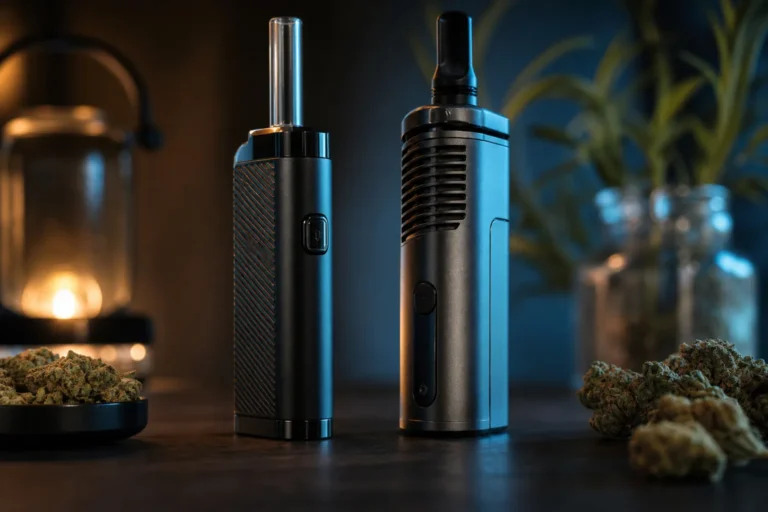
How to Pack a Vaporizer Travel Case
You open your travel bag before leaving and find the charger loose beside your vaporizer, sticky concentrate residue on a pocket, or fragile glass rattling against your other gear. If you’re learning how to pack a vaporizer travel case, the fix starts before anything goes into the case.
Most vaporizer travellers don’t have a case problem. They have a packing-sequence problem. For adult Canadian travellers, that means identifying the setup, emptying and cleaning it, separating fragile and powered parts, and protecting the device at the centre.
The right case depends on your device and accessories. This guide shows what belongs inside, what stays separate, and how dry herb and concentrate users can prevent damage and mess. Five protective moves take the setup from clean preparation to a verified closed case.
Protect the Device and Avoid Travel-Day Problems With a Cannabis Vaporizer Travel Case
A cracked glass attachment can end your trip before the first session. Sticky concentrate residue can soil clothing, an uncharged device can become useless, and an unprotected battery can contact metal accessories inside your bag.
A case label cannot prevent those failures. Tools420 lists an F20 Smell Proof Lockable Storage Case at $29.99, while its standard F20 listing shows 94 reviews. Those details help you compare buying options, but containment, separation, and inspection matter more than price, locks, or review counts. Yocan describes a hardshell travel case as a way to organise and protect a compact vaporizer setup.
Separate the device, power source, and consumables
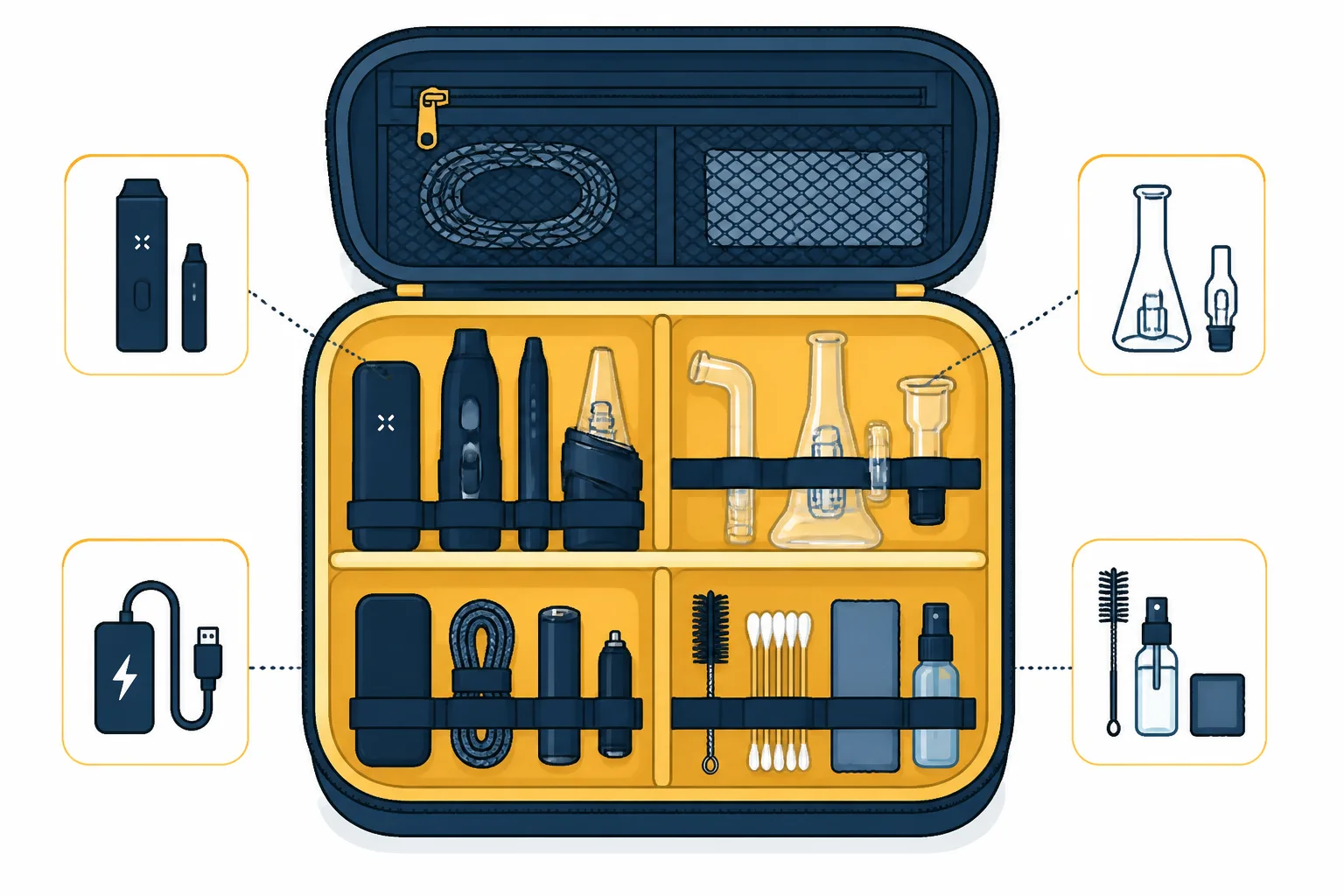
Start with a clean, switched-off vaporizer. Separate the device, charger, removable battery, glass, grinder, and cannabis products. PlanetHaze carries vaporizers, dab devices, glassware, and accessories, although no retailer can make an incompatible or poorly packed setup safe.
Weak setup: A dry herb vaporizer, USB-C cable, loose 18650 battery, and metal grinder share one open pocket.
Strong setup: A cleaned Arizer Solo 2 sits in its sleeve, the charger coils into its own compartment, and the removable battery stays in a protective battery case away from the grinder.
Use containment before adding padding
Put glass in a rigid sleeve or fitted compartment before filling empty space with padding. Seal concentrates and cleaning items separately so a loose cap cannot spread residue. If your glass attachment needs a fit check, the vaporizer glass adapter compatibility checklist fits the same preparation workflow.
Practical rule: Contain each item first, separate batteries from metal, and inspect the closed case before it enters your travel bag.
Bringing a vaporizer on a plane
Rules vary by jurisdiction, but electronic vaping devices, lithium batteries, and power banks generally belong in your carry-on or personal bag rather than checked luggage. Edinburgh Airport states that this placement is required for fire safety, so check your airline and CATSA requirements before departure.
“All electronic vaping devices, lithium batteries, and power banks must go in a carry-on or personal bag rather than checked luggage because of fire safety regulations,” according to Edinburgh Airport.
Items not allowed in a carry-on bag under TSA rules
A carry-on does not make every item permitted. Search results using TSA terminology may describe United States rules, not Canadian requirements, so confirm current CATSA guidance, airline conditions, cannabis restrictions, and destination laws before leaving. A smell-proof or lockable case does not make prohibited contents acceptable.
Choose the Packing Route for Your Vaporizer Setup
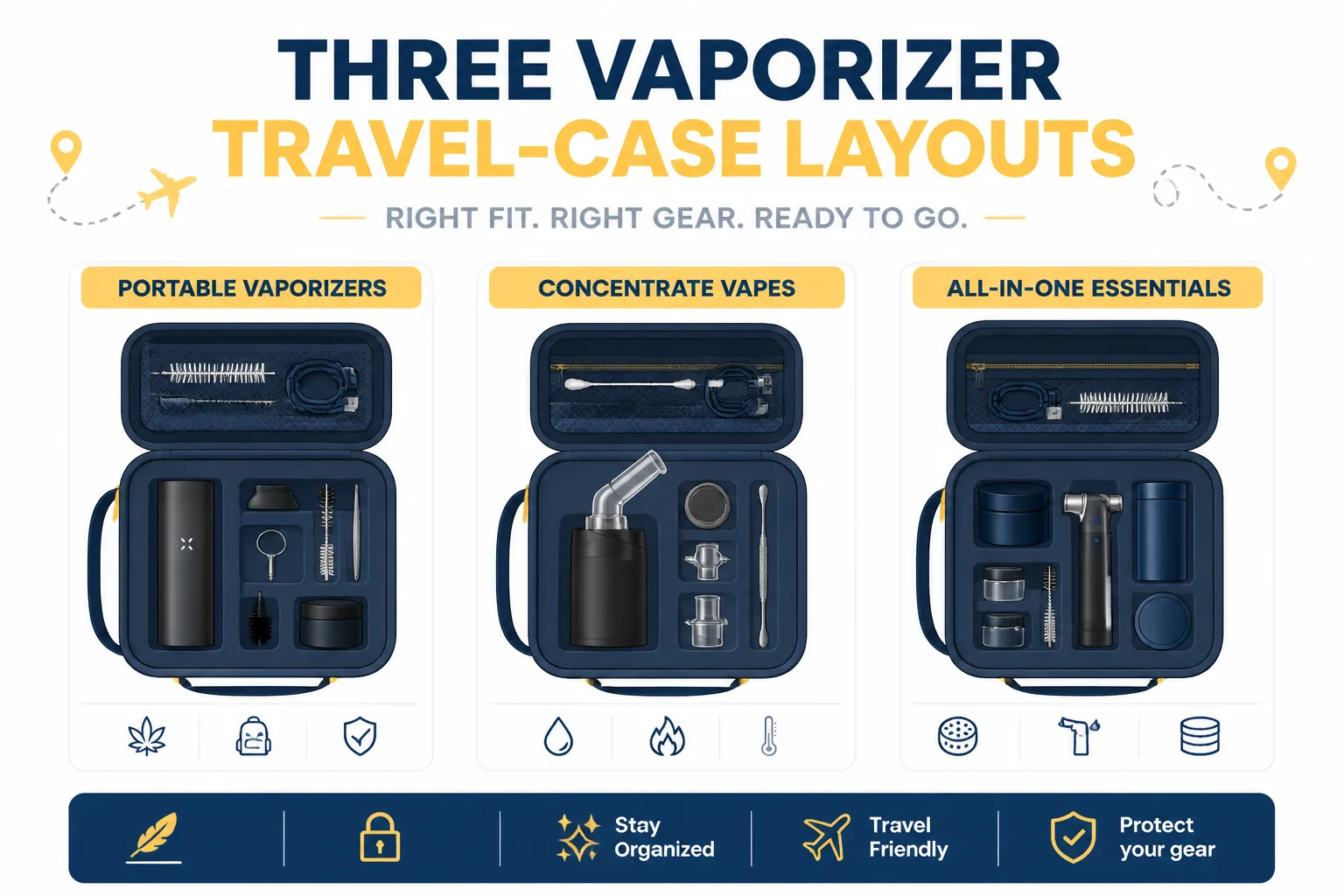
A case that suits a compact dry herb vaporizer may fail once you add glass, a grinder, or sticky concentrate storage. Match the case to the setup, not just the device name.
Available routes range from inexpensive F20-style cases to dedicated Volcano, Venty, Mighty+, and Crafty+ carrying cases. PlanetHaze offers several types of vaporizer accessories, although the exact fit still depends on your device and attachments. Choose the route before loading the case.
Compact dry herb setup
If you carry a small dry herb vaporizer without removable glass, a fitted case is usually the cleanest choice. The device should sit firmly in a central slot, while the charging cable stays in a separate pocket. A small grinder can fit beside it only when it cannot press against the screen, mouthpiece, or controls.
Weak example: A loose vaporizer, grinder, and cable share one open compartment, allowing the device to shift during travel.
Strong example: A Pax-style device sits in a fitted centre sleeve, the USB cable occupies its own pocket, and the grinder stays in a padded side section.
Concentrate pen and small accessory setup
A concentrate pen usually needs less space, but residue creates a different problem. Keep the empty pen separate from the storage container, mouthpiece, and charger. A compact fitted case works well when the pen cannot roll and the charger cannot rub against the concentrate area.
Large device with removable glass
A larger vaporizer with removable glass or a water attachment needs a larger accessory case. The glass should have its own padded zone, with dividers stopping movement on every side. Chargers, grinders, and cleaning items belong in separate sections rather than beside delicate glass.
Weak example: A glass bubbler rests beside a charger and cleaning brush in one oversized compartment.
Strong example: A removable water attachment sits immobilised between padded dividers, while the charger and cleaning supplies occupy separate closed pockets.
| situation | better move |
|---|---|
| Compact dry herb vaporizer with no removable glass | Use a fitted case or compact padded case with a central device slot and a separate cable pocket. |
| Concentrate pen with a small charger and storage container | Use a compact fitted case, keeping the empty pen and charger apart from concentrate residue. |
| Larger vaporizer with removable glass or a water attachment | Use a larger accessory case with immobilised glass, padded dividers, and room for separate cleaning supplies. |
| Mixed setup with device, grinder, charger, and multiple accessories | Use a lockable general case only if every component has a restrained, protected zone. |
Lay Out Every Item Before You Pack
A clean table gives you a better starting point than an open travel bag. You can spot a missing cable, sticky residue, loose glass piece, or unsuitable battery container before anything enters the case.
Set aside one short pre-departure session for the full check. You’ll know which packing route fits your setup before leaving home, rather than sorting parts at the airport.
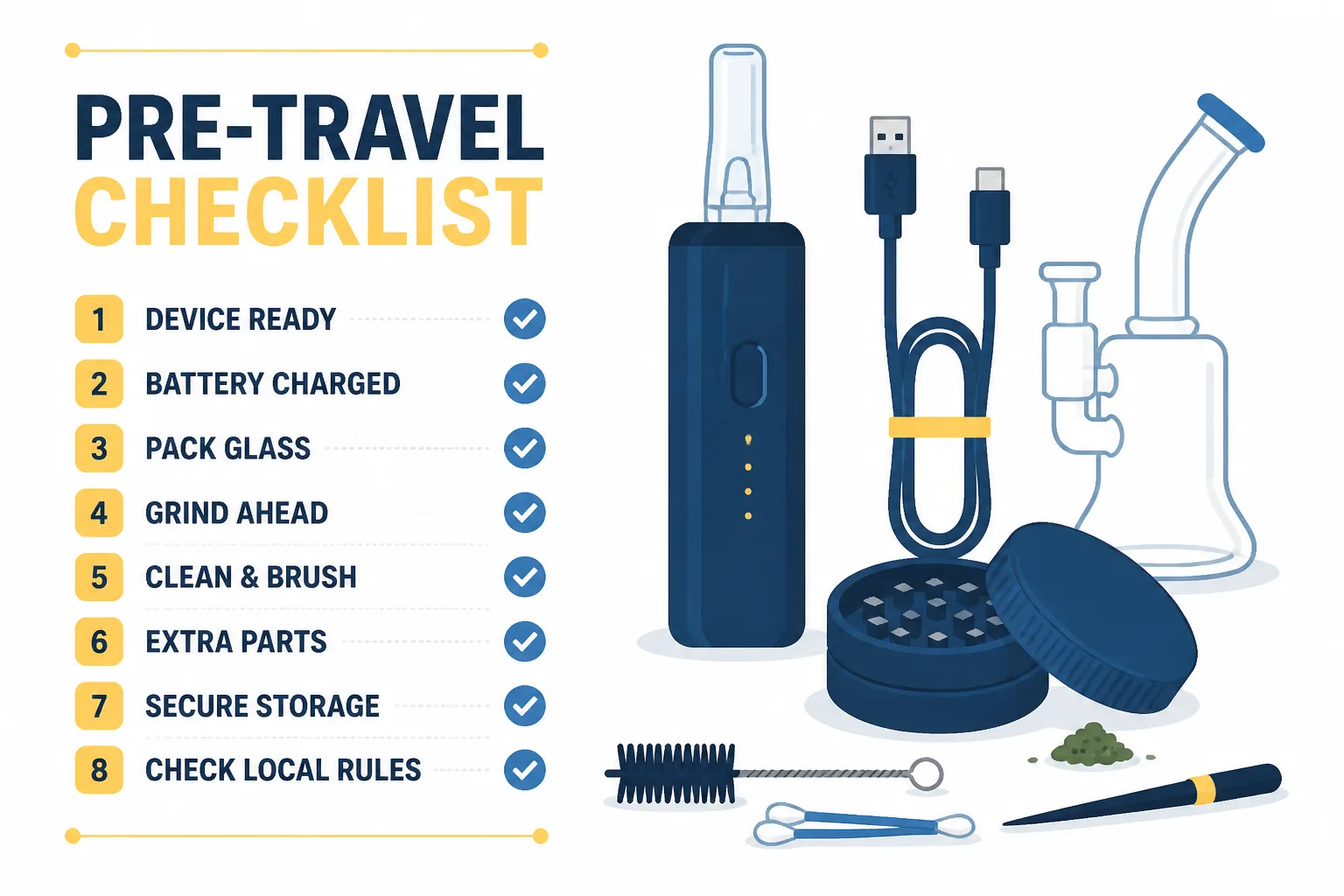
The universal packing checklist
- Vaporizer: Confirm that your device is switched off, cool, and free from loose material.
- Charger or cable: Match the cable to the device and coil it loosely without sharp bends.
- Removable battery: Remove it from the vaporizer if the device uses a loose lithium-ion cell.
- Hard plastic battery container: Use a dedicated case that prevents the battery contacts from touching metal objects.
- Mouthpiece: Check that it is clean, dry, and protected from pressure.
- Glass: Remove any detachable glass and inspect it for cracks, chips, or moisture.
- Grinder: Empty loose material and wipe residue from the teeth and lid.
- Concentrate container or empty storage: Seal concentrates separately, or carry a clean, empty container for used parts.
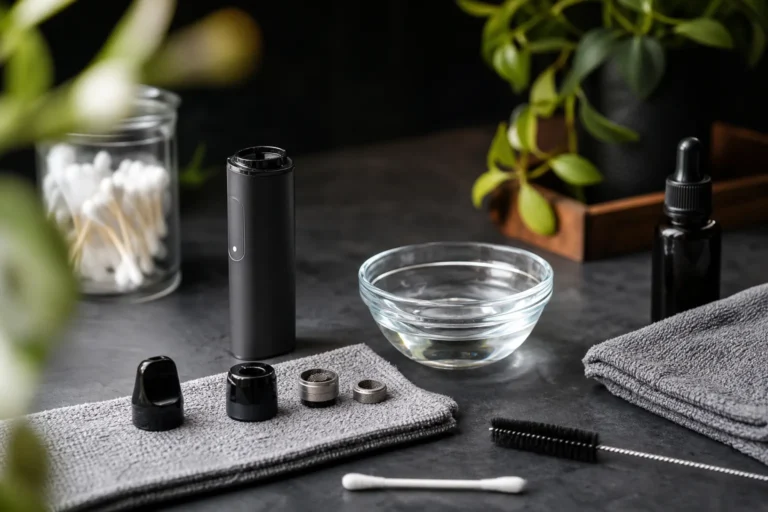
- Cleaning supplies: Gather cotton swabs, a small cleaning brush, and suitable cleaning solution in sealed packaging.
The two-minute device inspection
Start by identifying whether your device is made for dry herb, liquid, or concentrates. Check the chamber, tank, or cartridge, then inspect the threads, contacts, seals, and mouthpiece for residue or moisture.
Empty loose dry herb and liquid tanks before transport. Arizer’s published storage guidance also recommends cleaning these areas to reduce leaks and strong odours.
If the device has a removable glass attachment, remove it now and place it on the table beside its protective sleeve or divider. A fixed mouthpiece can stay installed only when the case supports it without pressure.
Packing a vape for air travel
Pack your vape in a restrained protective case within your carry-on setup, where permitted by the applicable airline and airport rules. Keep the device in the case’s central zone, never loose in a bag pocket, and complete the inspection before leaving home.
Where to put your vape when travelling
Place the powered-off vaporizer in the case’s central padded compartment, with the charger and cleaning supplies in separate pockets. Keep removable batteries in a dedicated hard plastic container away from metal objects, as Arizer’s guidance advises.
Finish by closing every container, checking that no part shifts when the case is gently moved, and keeping concentrates separate from clean electronics. This staging step shows whether the case is ready or whether your setup needs a larger compartment.
Pack the Case in Five Protective Moves
You’ve checked the loose parts on a clean table. Now pack them in an order that protects the device first, then controls residue, impact, and battery risk.
Finish with a restrained vaporizer, clean contact points, immobilised glass, and no loose material. Each move prevents a common travel-day failure.
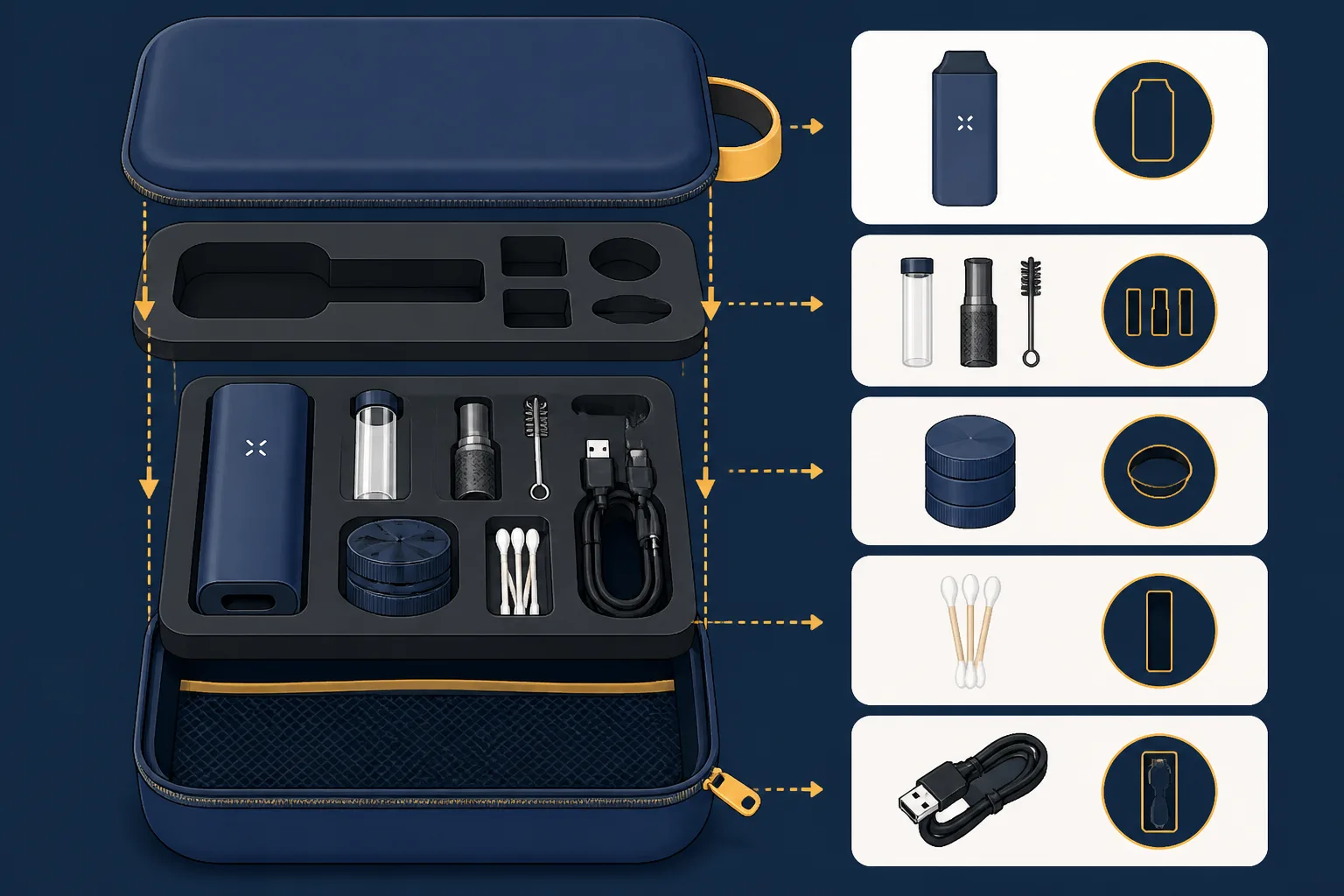
1. Power down, empty, and inspect the vaporizer
Turn off your vaporizer, remove the mouthpiece, and empty every chamber, tank, or concentrate compartment before packing. You should see no loose herb in a dry herb oven, liquid around a tank, or concentrate inside a loading tool.
Before: A powered-off Arizer Solo 2 still contains crumbs around the oven edge. After: The chamber is empty, the mouthpiece is removed, and the device cannot activate inside your case. This prevents loose herb from spreading through the case or heating against nearby items.
Packing a dry herb vaporizer
Pack a dry herb vaporizer empty and powered off, with its oven, mouthpiece, and contact points inspected before the device enters the case. Keep the main unit in the protected centre rather than beside hard accessories.
2. Clean and dry the device and glass
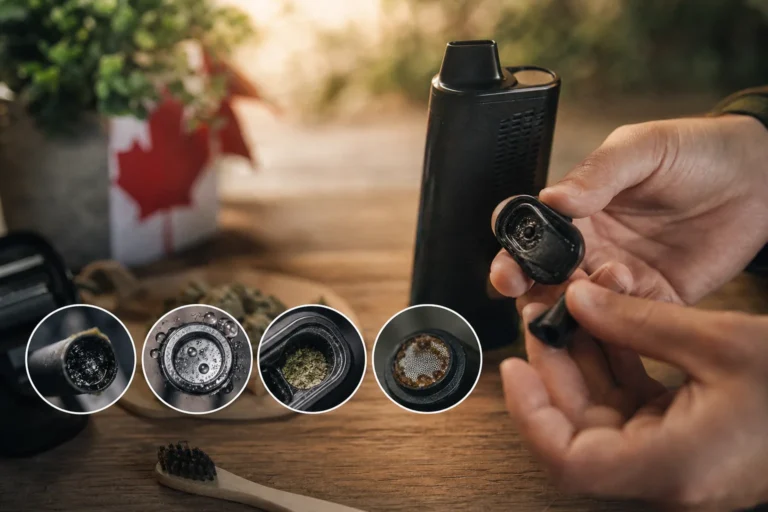
Wipe the oven edge, mouthpiece, charging contacts, glass connection, and threaded parts with the suitable cleaning tool. Let every surface dry fully before closing the case.
Before: A glass attachment has sticky residue around its joint. After: The joint is clean and dry, with no film transferring to the case lining. This prevents residue from collecting on glass or reaching clean electronics.
3. Place the device and glass so they cannot collide
Remove detachable glass, tanks, cartridges, and external batteries before placing the main device in its centre strap or custom foam slot. Wrap fragile glass separately and fill empty space so you cannot hear it move.
Before: A bubbler rests loose beside a DaVinci IQ3. After: The device is restrained in the centre, while the glass sits in its own padded compartment. This prevents impact cracks and keeps a cable from pressing against the device.
4. Separate batteries, charger, grinder, and cleaning items
Put loose batteries in a hard plastic battery case, the charger in its own pocket, and the grinder and cleaning tools away from delicate surfaces. Amazon.com also recommends a secure centre position for the main device and a hard plastic case for loose batteries.
Before: A 510 battery, USB-C cable, grinder, and brush share one pocket. After: The battery is enclosed, the cable is coiled separately, and the grinder cannot rub against glass or the device. This prevents metal contact, scratches, and cable pressure.
5. Close, shake-test, and label the case
Close every container, zip each compartment, and gently move the case from side to side. You should hear no rattling and find no item shifting when you open it again.
- Device: The vaporizer stays centred and powered off.
- Glass: Detachable pieces remain padded and immobilised.
- Batteries: Loose cells remain inside a hard plastic case.
- Accessories: The charger, grinder, and cleaning items stay in separate compartments.
- Case label: Your name and contact details sit on the exterior without identifying cannabis contents.
Adapt a Cannabis Vaporizer Travel Case for Flights and Fragile Setups
A compact case works until your setup includes a desktop-style device, removable glass, several batteries, or concentrate storage. Plan for the awkward pieces, especially when you’ll unpack and repack your gear throughout the trip.
Your case protects equipment, but it does not change transport rules. A smell-proof or lockable case contains permitted items; it does not grant permission to carry prohibited contents. Before departure, verify current airline requirements, CATSA guidance, destination laws, and border rules in Canada. Do not rely on United States terminology or forum anecdotes.
Packing a large or glass-heavy setup
Place the main device in the centre of a padded compartment, with its power switch off and removable glass detached. Wrap each glass piece separately, then immobilise it so it cannot strike the device or another attachment when you lift the case. Keep the device accessible for inspection without leaving loose parts in an open pocket.
For a desktop-style unit, use a case with enough depth for the base, glass, cable, and attachments without forcing the zip closed. If the case is under-filled, add fitted padding rather than clothing that shifts around. Your glass should stay supported at its widest points, not pressed against a narrow stem or mouthpiece.
Packing several batteries and cables
Keep every external battery inside a hard plastic battery case, with terminals protected from metal objects, keys, and loose accessories. Place the battery case where you can reach it quickly, but never in an unrestrained pocket beside a cable or grinder. Store charging cables in a separate sleeve so their connectors do not press against the device.
For a flight setup, keep the battery case and vaporizer near the top of the travel case. Pack glass and heavier accessories lower down, where they’re less likely to fall when you open the lid. Your concentrate container should be sealed, compatible with its contents, and carried only where current rules permit it.
Choosing one case versus separate containers
One spacious case keeps a complete setup together and simplifies carrying. It can also allow movement when the interior is too large, while a crowded layout may make inspection slow. Multiple smaller containers separate batteries, glass, concentrates, and cleaning items more effectively, but you’ll carry more bulk and track more individual pieces.
What works
- Large-case fit: Choose a deep case with fitted padding when your desktop device and glass can sit securely without pressure.
- Fast access: Keep the powered-off device and protected battery case near the top, without placing loose parts in a pocket.
- Fragile separation: Give each glass attachment its own padded space so contact cannot create chips or cracks.
- Frequent unpacking: Use smaller labelled containers when you expect repeated access to batteries, cables, or cleaning items.
What fails
- Empty space: A large case lets a heavy device and glass move when padding does not fill the gaps.
- Loose batteries: Unprotected cells beside keys, tools, or cable ends create avoidable contact risks.
- Pocket loading: An open accessory pocket allows a mouthpiece, grinder, or concentrate container to shift into fragile glass.
- False permission: A lockable, smell-proof case does not override airline, CATSA, destination, or border restrictions.
Find the Failure Before You Leave With a Cannabis Vaporizer Travel Case
A packed case can still hide a fault. You may hear rattling only after walking, find grinder material in the charger pocket, or discover that a button has been pressed for hours.
Each symptom gives you a visible place to start. Check the device, closures, padding, and storage surfaces before your case enters your travel bag.
The case feels packed but the device still moves
If you hear movement, you have empty space or a shared-compartment problem. Lift and gently shake the closed case over a clean table. You should see no device shift and hear no glass contact.
- First check: Press the padding around the vaporizer without touching its controls.
- Immediate fix: Add fitted padding, remove unused space, and separate the device from glass and metal accessories.
Residue or odour appears outside its container
Sticky residue usually means a concentrate container, tank, or connection was not emptied and cleaned. Inspect the container threads, mouthpiece, and case lining before packing anything else.
- First check: Hold each container upright and look for wetness around its lid or connection.
- Immediate fix: Empty and clean the source, dry it fully, and replace contaminated padding.
The charger and battery compartment becomes unsafe
A grinder that spills into a charger pocket points to an unsecured lid or an overfilled compartment. Empty the grinder, close it firmly, then turn the closed case upside down over a clean surface to check for loose material.
A device turning on inside the case usually indicates incomplete shutdown or a pressed button. Power it off, activate its travel lock if supported, and confirm that no padding presses the control.
A fragile part arrives damaged
Glass that cracks after contacting the vaporizer usually lacks padding or shares a compartment with the device. Remove the glass, wrap or pad it, and place it in a separate immobilised zone.
A cleaning tool that punctures soft storage was placed without a sleeve. Cap it or move it into a rigid accessory container away from soft pouches.
| symptom | likely cause | first fix |
|---|---|---|
| Device turns on inside the case | The device was not fully powered down, or padding is pressing its control | Power it off, activate its travel lock if available, close the case, and check that no padding touches the button. |
| Grinder spills into the charger pocket | The grinder is overfilled or its lid is not secured | Empty and close the grinder, then invert the closed case over a clean surface to check for loose material. |
| Glass cracks after contact with the vaporizer | The glass shares an unpadded compartment with the device | Remove the glass, wrap or pad it, and place it in a separate immobilised zone. |
| Cleaning tool punctures soft storage | A sharp tool was stored without a cap or rigid sleeve | Cap the tool or move it into a rigid accessory container away from soft pouches. |
| Sticky residue appears on the case lining | A concentrate container, tank, or connection was not emptied and cleaned | Empty and clean the source, dry it fully, and replace contaminated padding before repacking. |
TSA stops for a vape in your bag
Yes, TSA may stop you for screening or inspection, and a case does not guarantee passage. A visible packing issue is separate from a legal determination, so check current TSA rules, airline requirements, and the rules for your departure, arrival, and connection points before travelling.
Verify the Packed Case at Three Checkpoints
A packed case can still fail after it leaves your table. You may have a silent button press, a loose glass attachment, or a faint odour that only appears after the case has moved.
Use three short inspections instead of trusting the case itself. A travel case protects your setup, but it doesn’t prove that the load is ready to travel.
The home check before the case goes into luggage
Before you place the case in your luggage, inspect each zone with the case open. You should feel no pressure on the zipper or latch, and you should hear nothing move when you gently tilt the closed case.
- Device state: Confirm your vaporizer is fully off, not merely asleep, with no button pressed by padding or accessories.
- Empty chambers: Check that the oven, tank, and concentrate path are empty, clean, and dry.
- Battery isolation: Keep removable batteries separated from loose metal items and positioned according to current applicable travel rules.
- Glass security: Confirm every glass piece sits in its own fitted or padded zone without touching another hard item.
- Residue control: Look for sticky film, loose herb, oil, or powder inside the case and around threads, caps, and grinder teeth.
- Closure test: Close the case smoothly without forcing the zipper, latch, or lid over a bulging section.
The security-ready check
After carrying the case to departure, repeat the visible checks before you present or open it. You want the same result: no rattling, no smell escaping, no shifted accessories, and no button pressure. Keep the device and batteries arranged according to the current rules for your airline, airport, and route. A case does not replace those requirements.
The arrival check and repack trigger
Open the case on a clean surface before using anything. You should find each item in its zone, with no cracked glass, displaced charger, leak, odour, or sticky residue. If the case has shifted, smells, leaks, or fails to close cleanly, stop and repack it. Do not force the zipper or latch. PlanetHaze can help you choose maintenance accessories, but only your inspection confirms that your particular setup remained travel-ready.
Airport Screening Questions About Cannabis Vaporizer Travel Cases
TSA stops for a vape in your bag
TSA may stop you, inspect your bag, or ask questions about a vape. Visibility does not decide permission. TSA is a United States agency, so check current United States rules, airline requirements, and destination laws before travel. A case cannot hide the device from screening or guarantee that you can carry it.
Removing your vape from your bag at airport security
Follow the screening officer’s instructions instead of assuming one universal process. You may be asked to remove the vape, leave it inside the case, or open the bag for inspection. If you’re travelling from Canada, check current CATSA guidance, your airline’s instructions, and the rules for your destination before packing.
Vapes on TSA scanners
Yes, a vape may be visible to airport screening equipment because it contains a battery, metal components, and electronic parts. Visibility, inspection, and permission are separate issues. Your case may organise and protect the device, but it does not prevent scanning, concealment concerns, or an officer’s decision to inspect the contents.
What a vape pen looks like to TSA
A vape pen may appear as a small electronic device with a battery, metal sections, and a cartridge or mouthpiece. Your device’s appearance can vary by model, so screening staff may ask what it is or inspect the bag. Adult status and lawful possession do not override airport, airline, border, or destination restrictions.
Packing a vaporizer travel case based on Reddit advice
Reddit packing stories can show how other travellers organise a device, charger, glass, grinder, and cleaning items, but anecdotes are not official permission. You can use those accounts for practical ideas, then check current CATSA, TSA, airline, border, and destination rules. Never treat one traveller’s uneventful trip as a guarantee for yours.
Start With the Empty-Case Packing Sequence
You can own a suitable case and still create trouble by packing in the wrong order. Loose parts move, residue spreads, and an exposed battery contact can turn a tidy setup into a travel-day problem.
Start with the empty case, not the device. Assign each item a protected place before loading anything. The case works because of that sequence, not because its label says “vaporizer case.”
Start with the empty-case checklist
Before you choose a pocket or compartment, lay the open case beside your device and accessories. Use this checklist to see what is ready and what still needs attention.
- Case: You have opened every compartment and checked the lining, zips, seams, and protective padding.
- Device: You have identified the exact setup, including its chamber, tank, mouthpiece, and detachable connections.
- Power: You have located the charger, cable, removable batteries, and any battery container you use.
- Fragile parts: You have separated glass, mouthpieces, pods, and other breakable attachments from heavier items.
- Cleaning supplies: You have gathered the small items you use to handle residue without placing them beside loose glass.
- Empty spaces: You have confirmed that no compartment forces pressure onto a button, glass joint, or connection.
Complete the six-move action plan
- Inspect the setup: Identify your device, attachments, power parts, and fragile pieces before packing anything.
- Empty and clean it: Clear and clean the chamber, tank, mouthpiece, and connections so you don’t carry loose material or wet residue.
- Separate power and fragile parts: Keep batteries and charging equipment apart from glass and delicate attachments.
- Place each item: Put the device in the protected centre, then place glass, batteries, charger, grinder, and cleaning supplies in their assigned zones.
- Close and shake-test: Zip the case and gently shake it, then reopen it if you hear movement or feel pressure.
- Verify current requirements: Check applicable Canadian airline, CATSA, destination, and border requirements before you travel.
Lay out your empty case and complete the pre-packing checklist before deciding where any accessory belongs. That small task gives you a clear starting point and keeps your packing decisions deliberate.
If you want a faster way to prepare, PlanetHaze provides vaporizer education, related accessories, and support for adult Canadian travellers. You can find practical guidance in PlanetHaze’s vaporizer education and news before organising your next discreet setup.