
What Is Conduction Heating in a Vaporizer?
You set your vaporizer to the temperature you always use, take a draw, and get a thin stream of vapour. The next pull tastes harsh, while part of the flower still looks barely used. To understand what conduction heating is in a vaporizer, start with the heat path: direct contact between the load and a heated chamber surface.
With conduction heating, the cannabis touching the chamber wall warms before the material in the centre. Packing, airflow, and stirring affect how evenly that heat reaches the load. Most uneven results come from that heat-transfer pattern, not necessarily from the temperature setting.
This guide explains what direct contact means, why conduction can feel quick and simple yet extract unevenly, and how it differs from convection heating. PlanetHaze lets you compare dry herb vaporizers, concentrate devices, chamber designs, and cleaning needs for your use case. Your choice still depends on how often you vape, what you use, and how much maintenance you’re willing to handle.
How the Heating Method Affects Taste, Extraction, and Inhalation
When your flower touches a hot chamber wall, the heating method affects more than vapour speed. It can change flavour, extraction, vapour density, and how evenly you use the material. That matters when you want a discreet session without wasting part of your load or scorching the edges.
Vaporization is designed to release active compounds without setting the plant material on fire. You should still treat temperature, device quality, material, and inhalation habits as safety factors, not guarantees.
Dry herb vaporizers and lung exposure
A dry herb vaporizer may reduce exposure to smoke and ash compared with smoking, but you shouldn’t treat it as risk-free or medically harmless. The supplied competitor comparison places cannabis combustion at approximately 450°F, while a lighter flame reaches approximately 1,900°F. These are approximate reference points, not a promise that every device stays below combustion.
The heating method matters because direct contact can create hotter areas when your chamber is packed tightly or left unstirred. Staying below combustion remains the central purpose of vaporization, yet inhaling heated cannabis vapour still carries potential risks. A dry herb vape also isn’t automatically equivalent to smoking, either in exposure or effect.
The supplied research states the intended purpose plainly:
Vaporization is intended to release active compounds without setting the plant material on fire.
How dry herb vaporizer effects compare with smoking
Dry herb vapes can produce strong effects, but you may experience them differently from smoking. Your result depends on the material, dose, temperature, inhalation, and how completely the chamber extracts the flower. Different compounds volatilize at different temperatures, so one setting may emphasise flavour while another produces denser vapour and a heavier effect.
For example, a weak setting might read, “Maple Kush, 320°F for every session,” even when your load produces thin vapour. Stronger example: “Maple Kush, start at 365°F, then increase gradually if the vapour remains light.” That approach gives you more control without treating one temperature as universal.
A practical rule for comparing heating methods
Compare conduction devices by contact, temperature control, packing tolerance, and cleaning needs. You want a chamber that heats the load consistently, not simply the highest advertised temperature. PlanetHaze lets you compare vaporizers and accessories in one place, although device choice still depends on your material, session length, and maintenance tolerance.
Practical rule: Choose the lowest setting that gives you satisfying vapour, then increase gradually while watching for harshness, dark spots, or a burnt taste.
How Conduction and Convection Transfer Heat
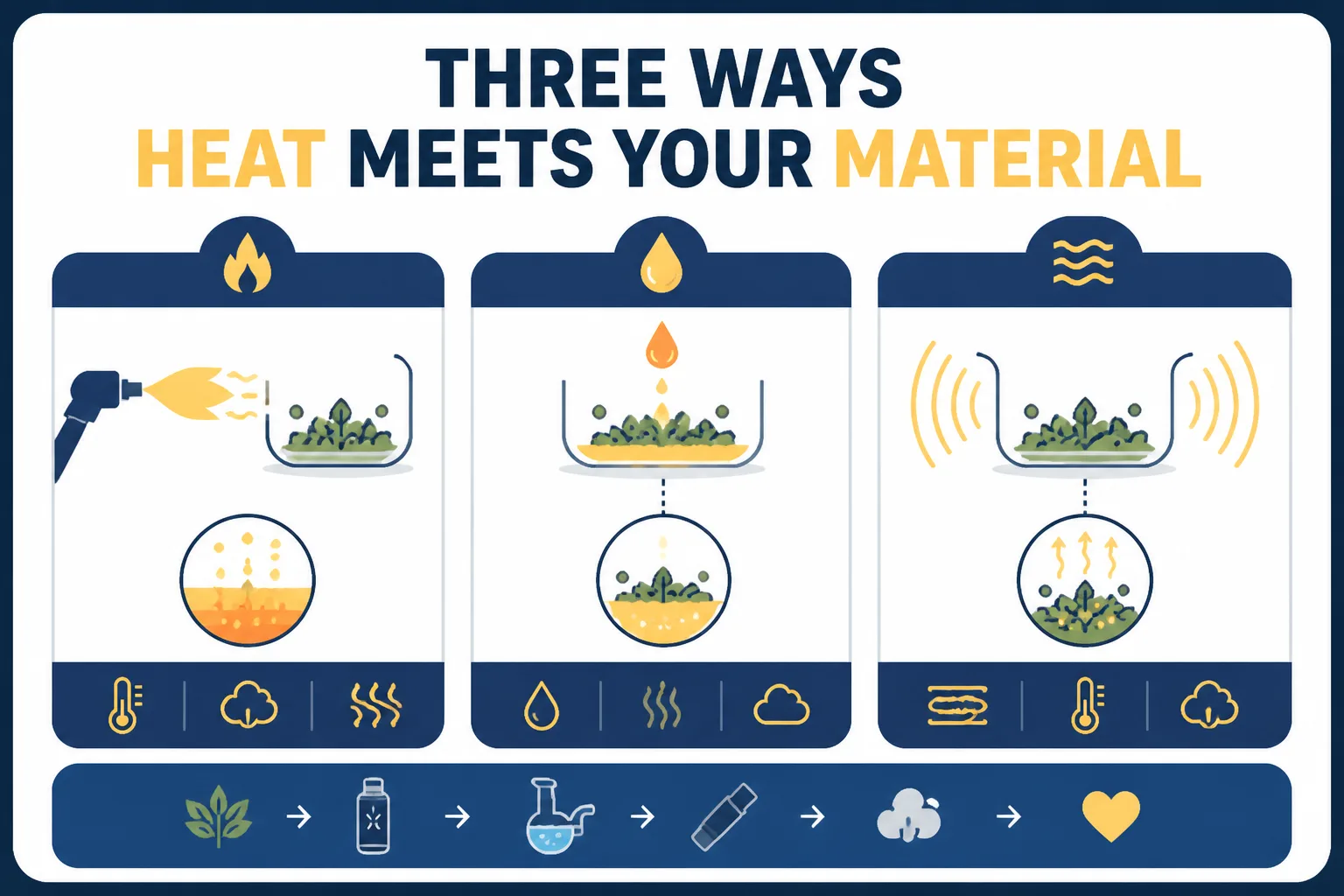
A vaporizer can use two main heat paths. Both aim to warm cannabis below combustion, but the material receives that heat in different ways.
Conduction depends on contact with a hot chamber surface. Convection sends heated air through the load instead. That difference helps you predict speed, extraction, flavour, and how much packing affects your session.
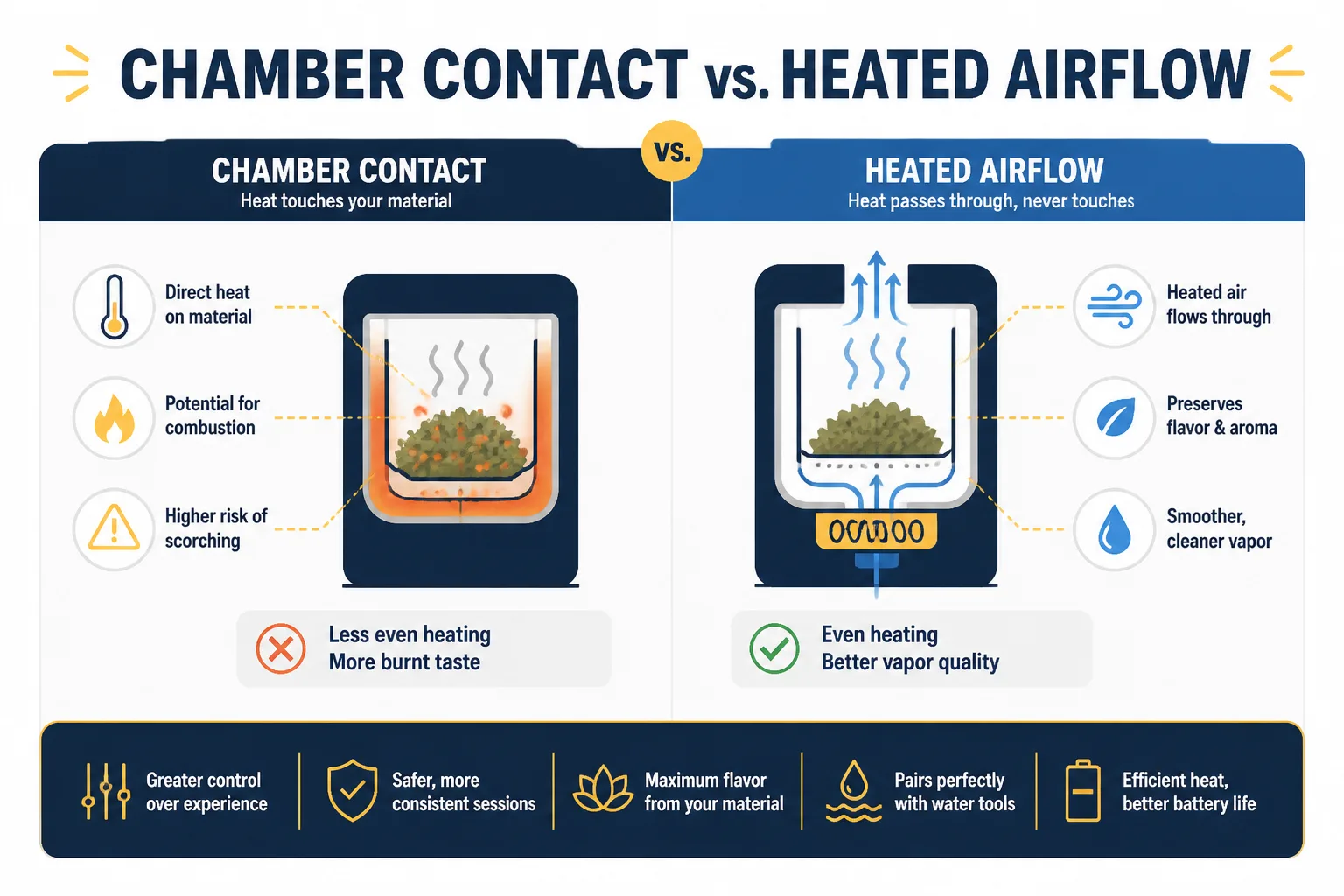
Conduction uses chamber contact to transfer heat
Conduction heating transfers heat directly from a hot chamber to your flower or concentrate. The material touching the chamber wall warms first, so conduction devices are generally fast and simple, but the centre of a packed load can lag behind.
- Direct contact: Your cannabis receives heat from the chamber surface around it.
- Quick operation: You’ll often get a straightforward portable session without waiting for airflow to heat the load.
- Contact-layer heating: Your outer material may darken before the centre extracts fully, especially when the chamber is tightly packed.
Convection heats through moving air
Convection heating moves hot air through your dry herb instead of relying mainly on a hot chamber wall. This can favour more even heating and more complete extraction, particularly when your load allows air to pass through it.
- Airflow-driven heat: Heated air reaches more of your material as you draw.
- Potentially even extraction: You may see less dependence on one hot contact layer.
- Load sensitivity: Your grind, packing density, draw speed, and airflow still affect performance.
Choosing conduction or convection for dry herb
Convection may suit flavour-focused or densely packed dry-herb sessions, while conduction can work better when speed and simplicity matter. Neither method wins every session. Your material, pace, and preferred vapour density all affect the decision.
Heating speed: conduction versus convection
Conduction is generally associated with quicker, simpler heating, but your device’s heat-up time also depends on its battery, chamber, temperature, and load. A well-designed convection or hybrid vaporizer may still heat quickly enough for your routine.
| situation | better move | why |
|---|---|---|
| A quick, discreet portable session | Consider conduction | Direct contact is generally fast and simple to operate. |
| A flavour-focused session | Consider convection | Hot air can favour more even heating and reduce dependence on one hot contact layer. |
| A packed or dense dry-herb load | Compare convection or hybrid designs | Airflow through the load may help reduce the centre-lag problem associated with direct contact. |
| A user who values straightforward controls | Consider a simple conduction device | The research describes conduction as uncomplicated, though packing and stirring still affect results. |
Choosing the mechanism for dry herb sessions
Hybrid designs and airflow patterns can blur the conduction-versus-convection categories. When you compare PlanetHaze listings, inspect the heating description, chamber design, airflow path, and maintenance access rather than relying on the method name alone. Your choice should match your session pace and cleaning tolerance.
How Conduction Heating Turns a Packed Chamber into Vapour
When you load dry herb into a conduction vaporizer, your flower doesn’t heat evenly all at once. The device first heats the chamber, so the material touching its wall receives energy before the material in the middle.
That heat path explains why your draw can taste strong while the centre of your load remains under-extracted. Conduction works best when you treat the chamber, pack, airflow, and temperature control as one system.
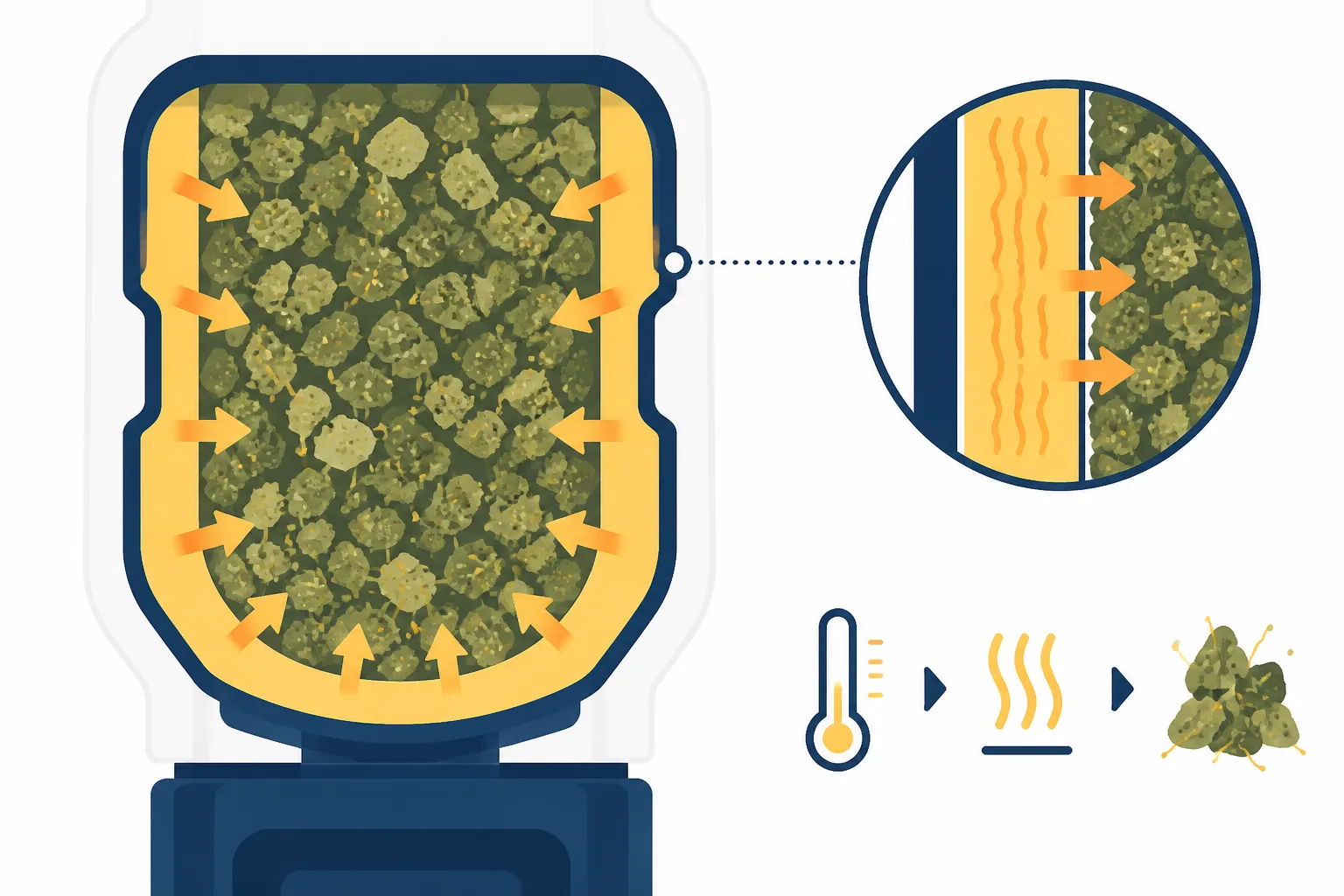
The heater warms the chamber wall
Your device uses a heater beneath, around, or inside the chamber. That heater raises the chamber wall to the selected temperature, and the wall transfers heat directly to the dry herb touching it. The goal is to volatilize compounds below combustion, not burn the plant material.
In a small load, the first heated area is the outer contact layer. You may notice vapour quickly because this material has the shortest heat path.
Direct contact starts extraction at the outside
Your flower touching the wall receives heat first. If that contact layer stays against a hot surface for too long, it can become too hot while the centre still lags behind. You may taste a harsher outer layer, see darker material near the chamber wall, and find lighter herb in the middle.
Weak pack: A tightly compressed 0.2 g load of Blue Dream blocks airflow and presses hard against one side of the chamber.
A looser pack: A lightly filled 0.2 g Blue Dream load leaves room for air to move around the material and reduces uneven wall contact.
How the centre catches up through conduction and airflow
Heat then moves inward from the heated outer layer toward the cooler centre. Your airflow helps carry heat through the load, while occasional stirring exposes fresher material to the warmer chamber surfaces. Follow your device manual, and never disturb a hot chamber carelessly.
- Wall: Your heater warms the chamber surface.
- Contact layer: Flower against that surface heats and begins releasing vapour.
- Centre: Heat reaches the middle more slowly through conduction and moving air.
Why chamber design matters more than the label
Conduction tells you the primary heat path, not the complete performance specification. When you compare PlanetHaze vaporizers, inspect chamber geometry, airflow design, temperature control, and material compatibility together. A device with an accessible chamber may also be easier for you to clean and maintain, but its pack size and airflow still determine how evenly your load heats.
Where the Conduction-versus-Convection Rule Breaks Down
Direct chamber contact doesn’t decide your entire session by itself. Chamber material, airflow, load size, and temperature control can change how strongly that contact affects your flower. A compact conduction vaporizer with open airflow may behave very differently from a tightly packed, fixed-temperature device.
You also won’t always find a pure example. Hybrid vaporizers combine conduction and convection characteristics, so the practical result depends on the complete design rather than one label.
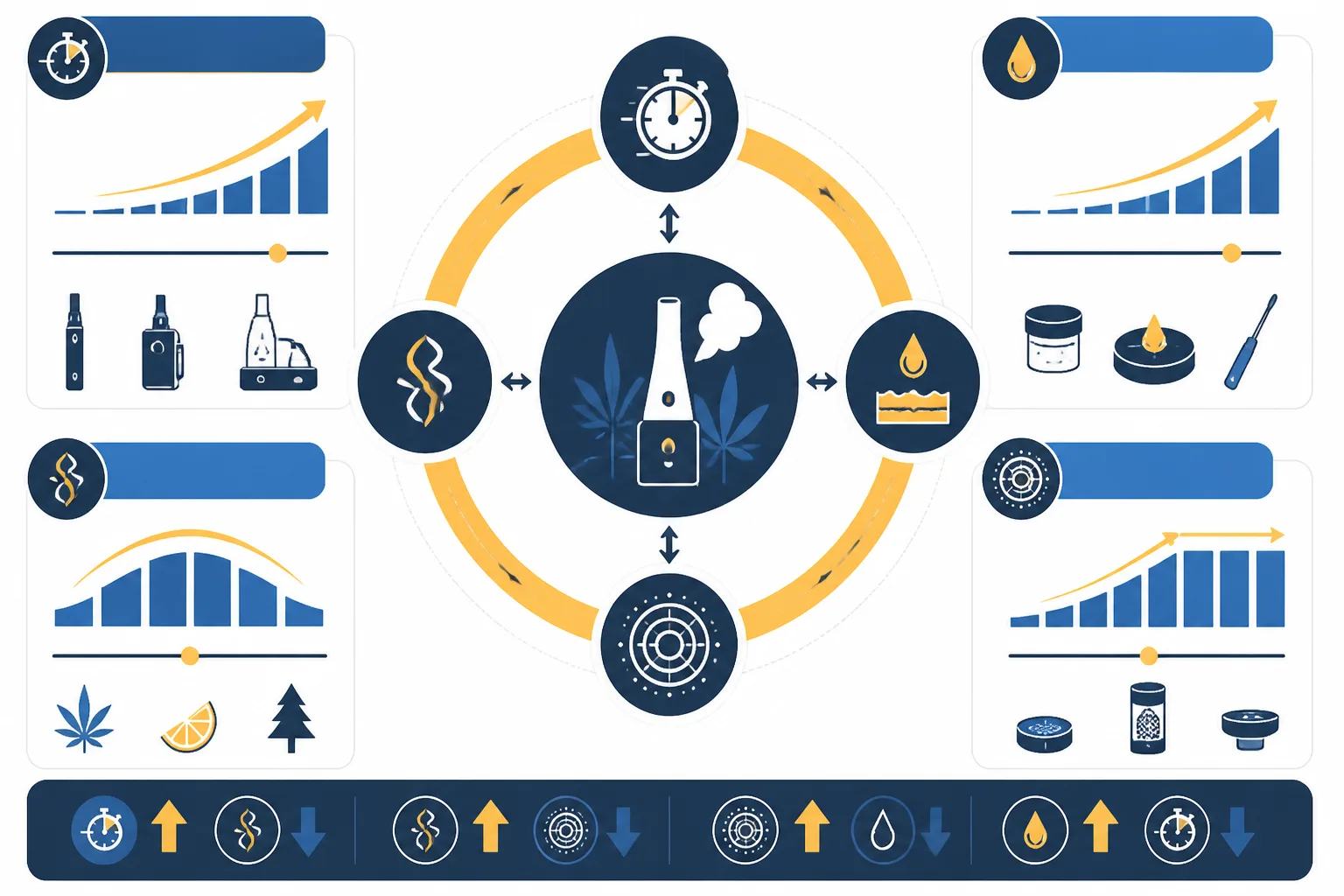
When chamber contact is an advantage
Conduction generally gives you quick heat-up and straightforward operation. You load the chamber, wait briefly, and draw. That direct heat can produce satisfying vapour without demanding precise technique, especially when you want a discreet session away from home.
Direct contact may also create a hotter outer layer around your load. A smaller pack, sensible temperature control, and occasional stirring can help you avoid uneven extraction.
Weak setting: A fixed 220°C session with a tightly packed Arizer Solo 2 chamber may heat the outside flower aggressively while the centre remains less used.
Stronger setting: A 195°C first session with a moderately packed chamber, followed by a stir and a later temperature increase, gives your load more balanced exposure.
When airflow and load size change the result
Your draw changes the heat reaching the material. Restricted airflow can keep heat concentrated near the chamber wall, while more open airflow may help move warmth through the load. A full chamber also behaves differently from a small, loose load, so the same device can produce different vapour and flavour from one session to the next.
Convection isn’t a guarantee of perfect extraction either. Poor packing, weak airflow, or unsuitable temperature control can still leave material unevenly used.
Why potency is not a single device specification
A dense cloud can feel impressive, but it doesn’t automatically mean better flavour, efficiency, or comfort. Higher heat may produce more visible vapour while reducing delicate flavour and making your throat feel harsher.
What works
- Fast heat-up: Conduction suits you when a short wait matters.
- Simple operation: Direct chamber heating usually asks less of your technique.
- Adjustable control: Lower starting temperatures can protect flavour before denser vapour later.
What fails
- Overpacking: A compressed load can restrict airflow and worsen uneven extraction.
- Chasing clouds: Maximum vapour may sacrifice flavour and session comfort.
- Ignoring maintenance: Residue can restrict airflow and change how your chamber heats.
When comparing PlanetHaze listings, check intended material, temperature range, airflow, chamber construction, and cleaning access together. PlanetHaze gives you those product details in one place, although no listing can predict every person’s draw style or packing preference.
Five Conduction-Vaping Mistakes That Create Bad Results
A poor session often starts with a small habit. You may notice weak airflow, a harsh contact spot, thin vapour, or flower with uneven colour. Each sign points toward a different correction.
Packing technique and cleaning routine matter as much as the heating label. Use this checklist to separate a chamber problem from a temperature or draw problem.
Overpacking the chamber and choking airflow
A tightly compressed load can restrict air through your dry-herb chamber. You may get a weak draw even when the device reaches its set temperature.
- Check the load: If the chamber is filled to the rim or packed like a plug, remove some material. A better setup leaves the herb supported without blocking the air path, following your device manual.
Ignoring the hot contact layer
Material pressed against a hot chamber wall may taste harsh before the centre is fully extracted. You may see a dark contact spot beside lighter flower.
- Check the contact: If one side looks overheated, loosen the load and avoid pressing it against the wall. Stir between cycles when the manual permits, but don’t expect stirring to correct every chamber design.
Mistaking a quick heat-up for even extraction
A dense first draw proves that vapour formed quickly. It doesn’t prove the whole load was used evenly, especially if you judge the device from one pull.
- Check the full cycle: If the first draw is strong but the flower remains unevenly coloured, take measured draws through the cycle and inspect the load afterward. A slower session may extract more evenly.
Using temperature extremes as a shortcut
Very low settings can produce thin vapour, while very high settings may reduce flavour and create harshness. Temperature affects flavour, vapour density, and extraction.
- Check the setting: If vapour is thin or harsh, move the temperature gradually rather than jumping from a low setting to the maximum. For example, replace a 220°C start with a 190°C start, then adjust in small steps.
Letting residue change the heat path
Resin and plant residue can restrict airflow and change how your chamber heats. You may notice a stale taste, inconsistent vapour, or a draw that feels tighter than before.
- Check the chamber: After the device cools completely, clean the chamber and air path according to the manual. Don’t scrape or wipe a hot chamber, even when residue looks soft.
PlanetHaze readers can treat maintenance and technique as part of device performance, although no cleaning routine removes every limitation of a particular vaporizer.
How to Judge a Conduction Vaporizer Before You Buy in Canada
You can’t judge a conduction vaporizer from its heating label alone. You need to see how the chamber, airflow, controls, and intended material fit your own sessions.
A useful buying test is simple: your vapour should stay reasonably consistent through the session. You shouldn’t see one isolated scorched contact layer while the rest of the material remains barely used.
Check the chamber and heating description
When you compare devices, check whether conduction, convection, or hybrid heating is doing the main work. Conduction means direct contact with a heated chamber surface, but that label doesn’t tell you the chamber’s shape, material, airflow support, or load fit.
| priority | what to check | why |
|---|---|---|
| Heating method | Conduction, convection, or hybrid design | It indicates whether direct chamber contact or heated airflow is the main heat path. |
| Chamber design | Chamber size, shape, and material | These factors influence contact area, load fit, and heat distribution. |
| Temperature control | Fixed or adjustable settings and usable range | Temperature affects flavour, vapour density, and extraction. |
| Airflow | Draw resistance and airflow path | A restricted or poorly matched airflow path can make a load difficult to heat and draw. |
| Intended material | Dry herb, concentrates, or compatible accessories | A device designed for one material may not safely or effectively handle another. |
| Cleaning access | Removable parts and accessible chamber surfaces | Easier maintenance supports consistent airflow and session quality. |
Match controls to your session priorities
Adjustable temperature gives you more control over flavour, vapour density, and extraction. It doesn’t guarantee even extraction. A beginner may prefer simple controls, while a concentrate user needs confirmed extract compatibility rather than a dry-herb temperature display.
Weak listing copy: “Advanced temperature control for every session.”
Strong listing copy: “Dry-herb conduction chamber with adjustable 180°C to 210°C settings; concentrates require a compatible accessory.”
Use consistency as the performance test
After you buy, watch the whole session rather than judging the first draw. Your material should look more evenly spent, and you shouldn’t find a markedly uneven load or an isolated scorched contact layer. Those signs can indicate poor fit or technique, not automatically a defective device.
PlanetHaze’s Canadian catalogue gives you a place to compare suitable vaporizers, dab devices, and accessories, although product specifications can’t replace real-world fit. Check material compatibility, portability, cleaning access, and any price shown in Canadian dollars. If you plan to add glassware, the vaporizer glass adapter compatibility checklist fits the same buying workflow.
Answers to Common Dry Herb Vaporizer Questions
You may still want a clear buying answer after comparing heating methods. The right choice depends on your material, session habits, budget, and expectations. A heating label alone can’t settle it.
Why no vaporizer guarantees the strongest effects
No vaporizer has research support for producing the strongest effects for every user. Your experience depends on dose, flower potency, temperature, extraction, and tolerance. A larger cloud doesn’t guarantee a stronger session, and a familiar brand name can’t promise one either. You’ll get more useful results by choosing a device that extracts evenly and suits your preferred session length.
Choosing a convection herb vaporizer
The right convection herb vaporizer is the one that fits your use case, not one with the most impressive specification. You should compare airflow, temperature control, chamber size, portability, cleaning access, and intended session style. A powerful home device may suit long sessions, while a smaller model may serve you better for discreet, short use away from home.
Choosing a dry herb vaporizer in Canada
The right dry herb vaporizer in Canada depends on your material, portability needs, controls, budget, and session style. You should also check Canadian availability, the price in CAD, warranty terms, replacement parts, and legal purchasing requirements. PlanetHaze offers options to compare by use case, although its catalogue alone can’t determine which device fits your habits.
Downsides of using a dry herb vaporizer
Dry herb vaporizers can cost more upfront, require charging, and demand regular cleaning. You may also see uneven extraction if your grind, packing, draw, or temperature doesn’t suit the chamber. Battery limits can interrupt a session, and inhalation isn’t risk-free. Treat technique, maintenance, and your own response as part of the buying decision.
How many hits a dry herb vape provides
There is no fixed number of hits from a dry herb vape because load size, device efficiency, temperature, draw length, material potency, and tolerance all change the result. You may get several short draws or fewer long ones from the same chamber. Stop based on your personal effects rather than chasing a target count, especially with unfamiliar flower.
A Three-Step Way to Choose the Right Cannabis Vaporizer Heating Method
Your next decision becomes clearer when you start with your material and setting, not a product rating. You may want quick solo sessions outdoors, relaxed use at home, or equipment for concentrates and shared sessions.
A short written comparison beats judging a device by its first cloud. Record whether the heating method, chamber, controls, and upkeep suit your actual use.
1. Define the session you want
Write down what you’ll vape and where you’ll use it. You may need a discreet dry herb vaporizer for short portable sessions, or a larger setup for relaxed home use. Concentrates require compatible dab devices or extract vape pens, not a dry herb chamber.
Weak record: “Portable vaporizer with strong vapour.” Better record: “Dry herb, solo sessions outdoors, discreet size, simple controls, easy cleaning.” The second version gives you a filter before you compare prices.
2. Choose the heat-transfer trade-off
Conduction may suit you when speed and simple operation matter most. You must still accept that the contact layer can heat before the centre, particularly when your load is packed poorly or your draw pattern changes.
Ask whether that possible uneven extraction bothers you more than a slower heat-up or more involved operation. Don’t choose by vapour density alone. A dense first draw doesn’t prove even extraction, efficiency, flavour, or fit.
3. Compare the chamber and controls
Start with PlanetHaze’s dry herb vaporizer collection and record the heating method and chamber information for each candidate that fits your session. Then check airflow, temperature controls, portability, charging, and cleaning access in the Canadian listing.
- Heating method: Record conduction, convection, or a stated hybrid design.
- Chamber details: Note the material, size, loading style, and whether the chamber suits your intended material.
- Airflow and controls: Confirm draw resistance, temperature adjustment, buttons, and session controls.
- Maintenance access: Check whether you can clean the chamber, screen, mouthpiece, and airpath without specialised tools.
- Candidate record: Capture each device’s heating method and chamber information from the PlanetHaze collection before comparing vapour output.
- Define the session: Write one page naming your material, setting, session length, and portability needs.
- Choose the trade-off: Decide whether conduction’s speed and simplicity outweigh its possible contact-layer difference.
- Compare the hardware: Score chamber design, airflow, controls, portability, and cleaning access before choosing.
If you want a faster way to compare suitable devices, PlanetHaze lists vaporizers, dab devices, extract vape pens, glassware, and accessories, with customer support and educational vaporizer guides, for adult Canadian consumers choosing equipment for dry herb or concentrates and personal sessions.