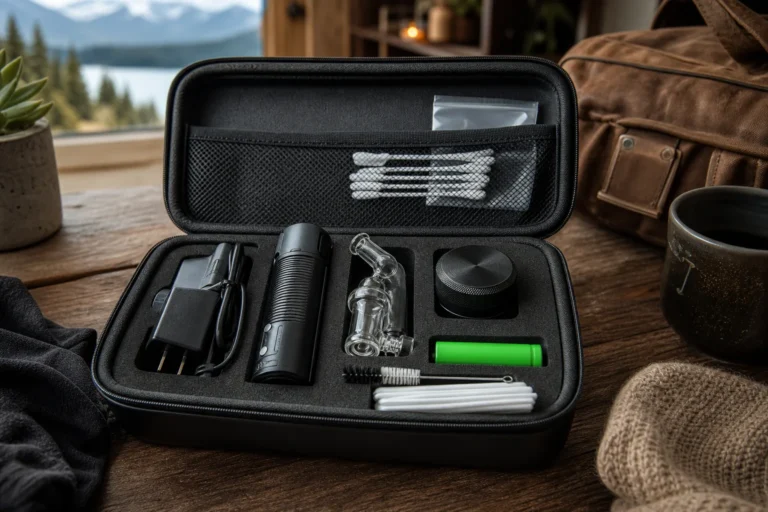

Clogged Vaporizer Airflow Checklist
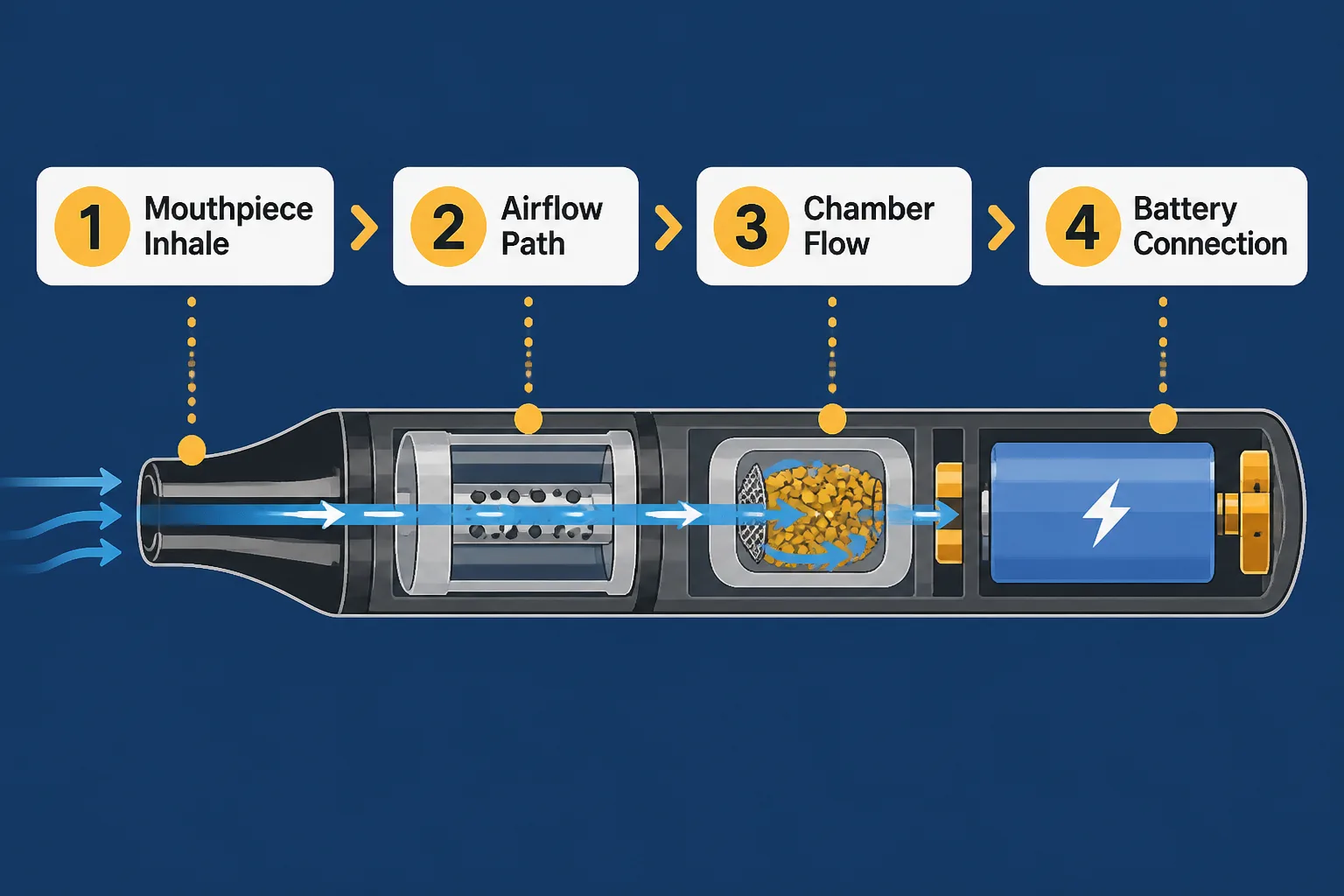
You take a draw from your portable vaporizer between errands and meet hard resistance. This clogged vaporizer airflow checklist starts with the mouthpiece, where residue and condensation often collect, then works inward to the cartridge, chamber, and battery connection. The mouthpiece may gurgle, the pull may feel tight, or no vapour may appear at all.
Most portable vaporizers don’t have a failed-device problem. They have a blocked airflow path. Residue, condensation, chamber buildup, tight packing, or a worn replaceable part can all create similar symptoms.
This safety-first guide covers cartridges, disposables, refillable vaporizers, and dab devices. You’ll learn when to clean and maintain an accessible part, when to leave thick oil at room temperature, and when replacement is safer than further troubleshooting.
Why Clearing the Airflow Path Prevents a Bigger Failure
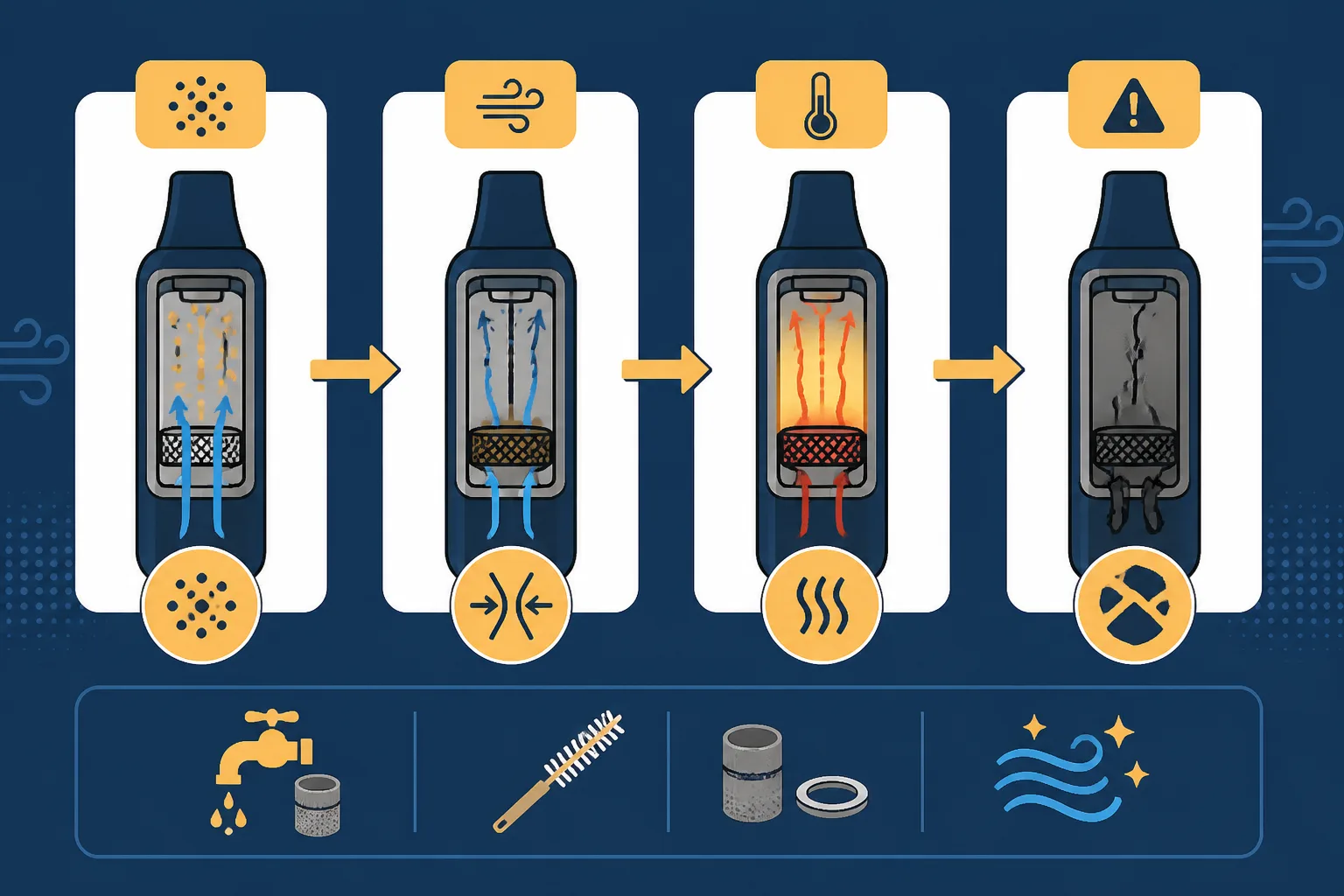
A restricted path changes more than the feel of your draw. When you pull harder against residue, condensation, packed material, or a flooded cartridge, your vaporizer may gurgle, deliver less vapour, alter the flavour, or leave extra residue around the mouthpiece and coil. A stronger pull adds stress instead of restoring normal airflow.
Your first goal is to remove the restriction without forcing anything deeper. A gentle check protects the mouthpiece, seals, coil, and battery-connected electronics. That boundary separates a simple blockage from damage caused by repeated pressure or heat.
What restricted airflow changes during a draw
When air cannot move freely, your device may heat unevenly or draw oil into places it should not reach. You may notice flooding, popping, a wet mouthpiece, or a harsh taste. A tight pull can also encourage you to inhale more forcefully, which may worsen condensation and move residue farther into the airflow path.
Don’t probe blindly with a pin, paperclip, or other hard object. You could damage a narrow mouthpiece, puncture a seal, touch a coil, or reach live electronics. If your cartridge or device is leaking, the guide to why vaporizer replacement parts leak can help you distinguish a blockage from a failing replacement part.
The five-gentle-blow limit before escalation
One competitor troubleshooting sequence recommends about five gentle blows before moving to another method. The step is limited, not a cure. Remove the mouthpiece where the design allows it, keep the device cool, and use light outward air only. Never forcefully inhale, blow repeatedly, or heat the device to soften an unknown blockage.
“Use about five gentle blows before moving to another method.”
After that point, stop repeating the same action. Continued pressure can push oil into the coil or battery connection, while overheating can damage the mouthpiece, seal, coil, or electronics.
When to stop troubleshooting and isolate the device
Stop using your device immediately if it becomes unusually hot, leaks heavily, or shows battery damage such as swelling, scorching, or a damaged casing. Place it away from flammable materials and don’t charge it. A faulty battery-connected device isn’t a cleaning problem.
Practical rule: If gentle airflow checks don’t restore the draw, or the device shows heat, heavy leakage, or battery damage, stop using it and replace or service the affected part.
Prepare the Device and Choose the Correct Cleaning Route
A restricted draw doesn’t always mean your vaporizer needs a deep clean. Residue, condensation, packed material, and a failed part each call for a different response.
Identify the device type, cool it fully, and inspect the airflow path from the outside inward. Don’t force a blockage through the device.
Set the device down, power it off, and remove the battery when possible
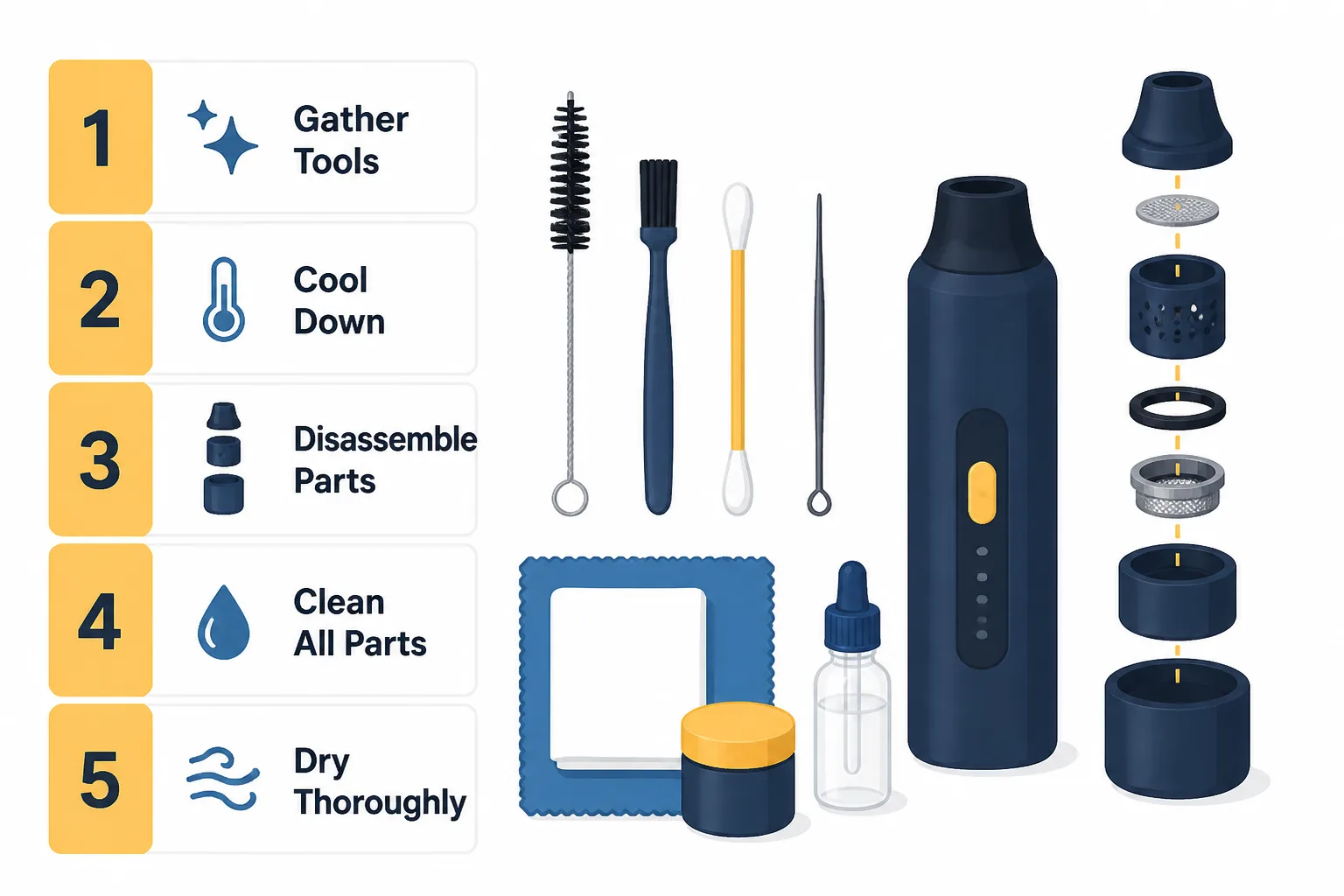
Place your vaporizer on a clean, stable surface and switch it off. Disconnect the charger, remove a removable battery or cartridge where the design allows, and let the device cool before inspection. If your manual says the battery must stay installed, follow that instruction.
Don’t open a sealed disposable or a non-serviceable battery unit. If you see swelling, scorching, casing damage, or unusual heat, stop using it instead of treating the fault as routine residue.
Gather cleaning supplies without opening sealed hardware
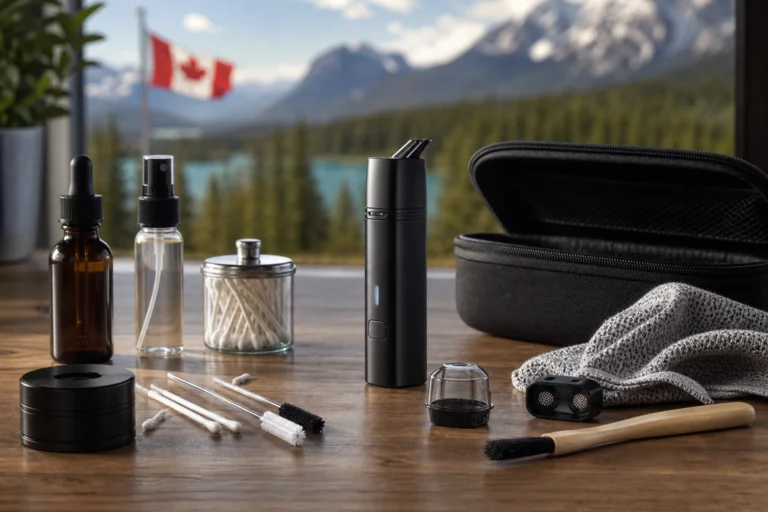
- Paper towel: Keep one ready to catch oil, condensation, and loosened chamber residue.
- Cotton swabs: Use dry swabs first for accessible mouthpiece and contact-point residue.
- Soft brush: Choose a clean, gentle brush for loose particles around a chamber or screen.
- Compatible isopropyl alcohol: Reserve it for removable, non-electronic parts that the manual permits you to clean.
- Device manual or product page: Confirm which parts you can remove and which materials tolerate alcohol.
Never pour liquid into a battery, charging port, sensor, coil assembly, or sealed disposable. Avoid sharp objects, pins, and needles in sealed hardware. They may puncture a seal, damage an airflow channel, or contact the battery.
Identify mouthpiece, cartridge, chamber, and contact-point symptoms
Inspect the mouthpiece for sticky residue or a blocked screen. Then check for condensation around the cartridge or mouthpiece, chamber buildup, overpacked material, and dirty contact points. Cartridges, disposables, refillable vaporizers, and dab devices don’t have identical serviceable parts, so compare each part with the manual.
Choose the clean, warm, or replace route
Choose the clean route when residue sits on an accessible removable part. Choose the warm route when thick oil or condensation needs to return to room temperature naturally. Choose the replace route when a sealed disposable, spent cartridge, damaged coil, cracked mouthpiece, or faulty battery remains blocked after gentle checks.
Practical rule: If you can’t identify a safe removable part, stop before using alcohol, tools, or force. A replacement part is safer than opening hardware you can’t service.
Clear the Blockage in Four Safe Passes
A tight draw, gurgling mouthpiece, or sudden lack of vapour usually points to a restriction somewhere along the device’s airflow path. You can locate it without repeatedly heating the vaporizer or forcing a sharp object into a sealed opening.
Work from the outside inward. This sequence separates mouthpiece residue, condensation, excess oil, chamber buildup, and packing problems before you decide that a part needs replacement.
Confirm the blockage with the device switched off
Switch off your vaporizer, disconnect the cartridge or removable mouthpiece, and let hot parts cool. Take one gentle, unpowered draw through the accessible airflow path. Success feels like even resistance without rattling or gurgling. Persistent resistance suggests the blockage sits farther inside or involves a failed part.
RELX describes tool insertion as one way to dislodge hardened debris, but sharp pins and needles can damage seals, coils, or narrow channels. Use the non-sharp cleaning route first, especially with sealed extract vape pens.
Clean residue and condensation from the mouthpiece
Inspect the mouthpiece under good light. Use a dry cotton swab or the cleaning method allowed by your manual to lift visible residue. Wipe removable parts dry, and never pour alcohol or another liquid into electronics.
Before: A sticky film remains around the mouthpiece opening, and the next draw still gurgles.
After: The mouthpiece is visibly clear, dry, and free from loose oil before it returns to the device.
Check chamber buildup, packing, and contact points
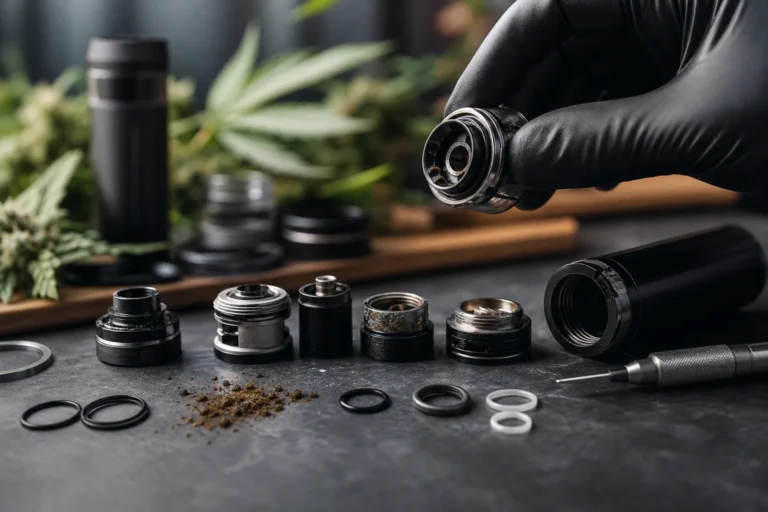
Look into the chamber for loose material, hardened buildup, or an overloaded bowl blocking the air route. Remove only material that the manual permits you to remove. Check cartridge contacts and removable seals for oil, moisture, or damage, then wipe them dry with a clean cotton swab.
- Mouthpiece: The opening has no visible residue.
- Removable parts: Condensation and excess oil are wiped dry.
- Chamber: Material doesn’t cover the intended airflow path.
- Contacts: The connection points are dry and undamaged.
Reassemble, test gently, and isolate the failed part
Reassemble each part without overtightening. Take one gentle draw without activating the device. Success means smooth airflow without gurgling, leakage, or unusual heat. If resistance returns, oil leaks, or the device heats unexpectedly, stop testing. The path may require a replacement cartridge, mouthpiece, or manufacturer support rather than more cleaning.
Handle Thick Oil, Cold Conditions, and Replaceable Parts Differently
A blocked disposable cartridge needs a different response from a clogged refillable vaporizer or dab device. You can worsen flooding by opening a sealed disposable, forcing a hard draw, or heating a battery-connected device without the manufacturer’s approval.
Thick oil, cold storage, temperature changes, overfilling, and lying storage can all restrict airflow or move oil into the wrong passage. Match the response to the device type and the failed part.
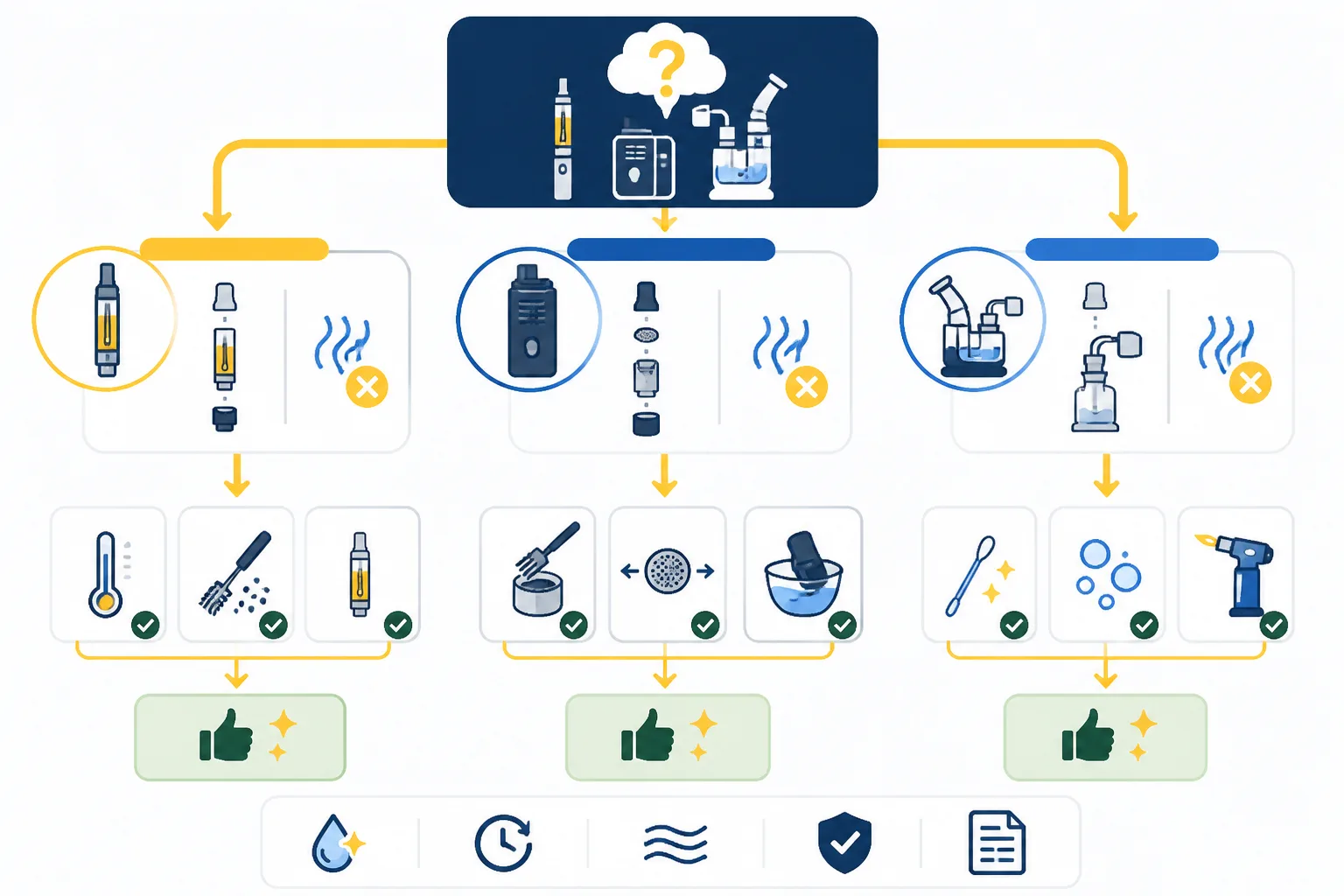
Cartridge and disposable devices versus refillable vaporizers
For a cartridge or disposable, inspect the mouthpiece, keep the device upright, and let it return to room temperature naturally. Don’t open a sealed disposable. For a refillable vaporizer or dab device, follow the manual before removing a chamber, coil, seal, or mouthpiece.
Weak storage example: You leave a filled extract pen on its side in a cold vehicle, then take repeated hard draws when the oil thickens.
Better storage: You store the device upright, let it reach room temperature naturally, and take a gentle draw without activating it.
When gentle warming can help thick oil
If the manufacturer allows warming, use low-level external warmth or simply let the device reach room temperature. Avoid direct flame, high heat, boiling water, and heating a battery-connected device beyond the manual’s guidance. If the device starts leaking, feels unusually hot, or remains blocked, stop.
For another fault-isolation route, PlanetHaze’s guide to why a vaporizer stops heating suddenly can help when restricted airflow appears alongside a heating problem.
What works
- Room-temperature recovery: Let thick oil loosen naturally before testing airflow.
- Approved gentle warmth: Warm only the exterior and only when the manufacturer permits it.
- Upright storage: Reduce oil movement toward the mouthpiece and airflow path.
What fails
- Direct flame: You risk damaging oil, seals, the body, or the battery.
- Hard repeated draws: You can pull liquid into the airway and create flooding.
- Opening sealed disposables: You expose yourself to damaged wiring, leaks, and contaminated parts.
How overfilling and hard draws create flooding
Overfilling a refillable chamber can cover its intended airflow route, while hard draws can pull liquid past the coil. Remove only the parts the manual identifies as removable, wipe excess oil externally, and don’t force tools through narrow passages.
When replacing a cartridge, coil, seal, or mouthpiece is safer
Replace a removable mouthpiece, cartridge, coil, or seal when it is cracked, saturated, deformed, persistently clogged, or visibly damaged. Replacement costs more and creates waste, but it is often more predictable than repeated cleaning. PlanetHaze offers these device categories, although compatibility still depends on the manufacturer and model.
Match the Symptom to the First Fix Before Trying Anything Stronger
Once you replace or reseat a part, the next mistake is often choosing a stronger remedy too soon. Condensation can look like a blockage, flooding can look like a dead coil, and a misaligned mouthpiece can look like a failed battery.
Use the least invasive fix first, then retest your device before removing anything else.
Symptom, likely cause, and first fix
| symptom | likely cause | first fix |
|---|---|---|
| Tight draw after storage | Condensation, thick oil, or residue after lying storage or a temperature change | Keep the device upright at room temperature, inspect the mouthpiece, and wipe accessible removable parts |
| Gurgling after a hard pull | Flooded chamber or excess oil drawn into the airflow path | Stop hard pulls, disconnect removable parts if allowed, and wipe excess oil from the mouthpiece and threading |
| Oil at the mouthpiece | Overfilling, flooding, condensation, or a saturated seal | Power down, wipe the mouthpiece and removable connections, and check the fill level and seals |
| No airflow after cleaning | A remaining blockage, misaligned part, tight threading, or a damaged mouthpiece | Retest the removable part separately where possible, inspect seals and threading, and avoid sharp tools |
| Device heats without producing vapour | Empty or incompatible material, poor contact, flooded chamber, or spent coil | Stop repeated activation, check compatibility and material level, then replace the coil or cartridge if required |
Mistake: forcing a hard draw
- Don’t force the draw: A stronger pull can move oil deeper into the airflow path and worsen flooding. Stop, let the device rest upright, and wipe the accessible mouthpiece and connections.
Mistake: probing sealed airflow holes
- Don’t insert metal into a sealed device: A pin or wire can damage the airflow channel, puncture a seal, or contact internal components. Inspect the opening and replace a sealed or damaged part instead.
Mistake: cleaning or heating the electronics
- Don’t soak electronics: Liquid can reach the battery, switch, or charging circuit. Clean only removable parts with the method approved for your model.
- Don’t apply excessive heat: Direct heat can thin oil unpredictably and create a battery hazard. Allow thick material to reach room temperature naturally.
Verify Airflow, Vapour, and Temperature After Cleaning
A device can feel better after cleaning without being fully clear. The mouthpiece may pass air while condensation still floods the chamber, or a loose seal may create a temporary improvement.
You can confirm the result without opening electronics or using special equipment. A successful cleaning gives you an even draw, clean vapour, a dry chamber, and a normal exterior temperature.
Check the mouthpiece and airflow before activating
Hold your vaporizer under good light and inspect the mouthpiece opening. You should see a clear path, with no oil film, loose material, or pooled condensation. Check the chamber, seals, threading, and contact points for residue or misalignment before reconnecting removable parts.
- Mouthpiece: The opening looks clear, with no visible plug or wet residue.
- Air path: Air passes evenly when you take a gentle draw without activating your device.
- Chamber: The chamber looks clean rather than flooded or coated in fresh oil.
- Connections: Threads meet evenly, seals sit flat, and contacts show no oil or damage.
Take one short, gentle test draw
Reassemble your vaporizer and take one short, gentle test draw. Don’t repeatedly activate a questionable device. You should feel steady resistance, hear no gurgling, and see vapour appear without a sudden surge of liquid.
Inspect for leaks, flooding, heat, and flavour changes
After that single test, check your mouthpiece and chamber again. Your device shouldn’t leak, spit oil, or show fresh flooding. The exterior should remain within its normal operating temperature, while the vapour should taste familiar rather than burnt, metallic, or unusually harsh.
Decide whether to clean again, replace a part, or contact PlanetHaze support
If airflow remains restricted, separate the removable cartridge, mouthpiece, or chamber from the battery where your design permits. Test each part independently, then inspect the seals and threading again. A blockage that returns immediately is a replace-or-stop checkpoint, not a reason to apply more heat or force.
Clean again only when you find visible residue and the part is approved for cleaning. Replace a damaged or repeatedly blocked removable part. PlanetHaze support can help identify a compatible replacement, but sealed electronics can’t be diagnosed safely from the outside.
Clogged Vaporizer Fix Questions Answered Directly
You can often resolve a restricted draw without taking apart the battery or applying more heat. Use the least invasive fix first, then stop when a disposable or damaged component makes replacement safer than further cleaning.
How to fix a clogged vaporizer
Power down your vaporizer, inspect the mouthpiece, and clean visible residue from compatible removable parts. Check for condensation or excess oil, then inspect chamber buildup and packing. Reassemble the device only when every part is dry and correctly seated. Take one gentle test draw. If the restriction remains or returns immediately, stop forcing airflow and assess the affected part for replacement.
Why vaporizer airflow becomes clogged
Your airflow may be blocked by mouthpiece residue, condensation, thick oil, overfilling, hard draws, lying storage, temperature changes, or tightly packed material. A damaged seal, failed coil, spent cartridge, or worn mouthpiece can create the same symptoms. Because one symptom doesn’t prove one cause, inspect the airflow path before choosing a stronger cleaning method.
When a clogged vaporizer can be fixed without replacement
You may clear minor residue or condensation when the affected part is removable and approved for cleaning. Don’t open a sealed disposable, cracked mouthpiece, failed coil assembly, damaged seal, persistently flooded cartridge, or battery housing. Never force a blocked path. If the component is designed to be replaceable, a compatible replacement is often the safer and more reliable outcome.
Start With the Mouthpiece, Then Follow the Airflow Path
When a blockage persists, your next move should become simpler, not more forceful. Open your device manual or product page and inspect the mouthpiece before using heat, tools, or liquid.
You can often identify the safest route from that first inspection. Clear what is removable, then recognise when your device needs a compatible replacement.
1. Power down and identify the device type
Turn your vaporizer off, disconnect the charger, and let it return to room temperature. Identify whether you have a cartridge pen, dry-herb vaporizer, extract vape pen, dab device, or sealed disposable before touching the airflow path.
- Manual checked: You have found the product page or manual and confirmed which parts are removable.
- Device isolated: You have disconnected power and placed the device on a clean, dry surface.
- Damage ruled out: You have stopped if you see battery swelling, a cracked housing, heavy leakage, or a burnt electrical smell.
2. Clear the mouthpiece and condensation
Inspect the mouthpiece first. Wipe visible residue from a removable part with the method approved for your device, then allow it to dry fully. If condensation or excess oil sits inside a compatible removable mouthpiece, clear it without pushing debris deeper into the airway.
3. Inspect packing, chamber, and connections
Check whether your material is packed too tightly, whether chamber buildup is narrowing the opening, and whether the mouthpiece, cartridge, seal, or coil is seated correctly. Don’t probe a sealed disposable or force a stuck component. If you regularly carry your device, the guide to packing a vaporizer travel case fits the same care routine.
4. Test once and choose cleaning, replacement, or support
Reassemble the dry parts and make one gentle test draw without repeated heating. Stop if your device becomes unusually hot, leaks heavily, or shows battery damage.
- Start with the manual: Open the manual or product page and inspect the mouthpiece before using heat, tools, or liquid.
- Clear the accessible path: Remove visible mouthpiece residue and condensation only from compatible removable parts.
- Check the chamber: Inspect packing, chamber buildup, connections, seals, and the coil without forcing anything.
- Make one test: Reassemble the device and take one gentle draw, then stop if the restriction remains.
- Replace the failed part: Choose a compatible mouthpiece, cartridge, coil, seal, or related accessory when damage or persistent blockage makes probing unsafe.
The safest repair is the one your device was designed to accept. PlanetHaze supports the next step with compatible replacement parts, although compatibility must be checked for your specific model.
If you want a faster way to choose and maintain cannabis vaporizers, PlanetHaze provides vaporizers, dab devices, glassware, replacement accessories, and educational news and guidance for adult consumers and concentrate enthusiasts.