How to Stir a Vaporizer Bowl Evenly
You take a few strong draws from your portable vaporizer, then the vapour turns thin before the session feels finished. When you open the bowl, the herb on top looks toasted while material underneath still appears green. If you’re learning how to stir a vaporizer bowl, this is the point at which a careful mid-session adjustment may help. You may be tempted to add more, but that can restrict airflow and crowd the chamber.
Most bowl users don’t have a dry-herb problem. They have an uneven-heat problem. Settled herb can expose its upper layer to more heat while lower material receives less, especially after repeated draws. Colour helps, but it isn’t a perfect measure of extraction.
The practical answer is one controlled mid-session stir, only after your device is safe to open, using a non-metal tool without aggressive digging. The goal is to expose less-heated herb to the heating path while preserving airflow and chamber integrity. That means avoiding overpacking, scratches, spilled herb in the airway, and repeated interruptions.
Stirring Redistributes Heat; It Does Not Rescue a Bad Pack
A settled bowl can leave the upper herb overworked while fresher material sits below the hot-air path. When you loosen that layer carefully, more usable herb reaches the heated route, and the remaining load can warm more evenly through the rest of the session.
The payoff is better extraction without adding more herb. The risk is turning a small correction into chamber damage, scattered particles, or a clogged airway. Stirring helps only when the pack is basically sound.

What an even bowl should feel and taste like
You should notice steadier vapour, a more consistent draw, and fewer sharp changes between hits. The flavour may become less fresh as the session continues, but it shouldn’t collapse immediately after the first few draws.
Research on smoking reports that up to 50% of herb compounds can be destroyed, according to PLOS ONE. That figure describes smoking, not a promise that stirring your vaporizer bowl recovers a fixed percentage.
Redistribute heat rather than trying to rescue a poor pack.
Why a settled top layer can hide unused herb
Repeated draws can settle fine particles and leave a toasted crust near the heat source. You may then see lighter herb underneath, but aggressive digging can push particles into the airway or mouthpiece. If airflow already feels restricted, the checklist for clogged vaporizer airflow fits the same troubleshooting workflow.
Weak example: You reopen a hot chamber, grind the load into powder, and tamp it down tightly. The bowl loses heat, airflow worsens, and already-spent herb gets handled again.
Gentle lift-and-turn: You wait through the first extraction phase, lift the settled layer once with a non-metal tool, and turn the material loosely without pressing it down.
The rule: stir only after the first extraction phase
Stir once when vapour or airflow drops while visibly lighter material remains. Do it only after your vaporizer is safe to open, and stop if the bowl looks evenly spent or the chamber feels crowded.
Practical rule: Stir once after the first extraction phase, using a gentle lift-and-turn when lighter herb remains and airflow or vapour has dropped.
Choose the Stirring Route That Matches Your Vaporizer
Heat moves differently depending on where your vaporizer applies it. If a portable oven heats mainly through its walls, the outside and centre may extract at different rates. If heated air moves through the herb, repeated opening can release heat without solving a real problem.
Check your model’s opening and cool-down instructions before touching the chamber. One controlled redistribution is usually enough, rather than a stir after every draw.

Conduction chambers that heat from the walls
A portable conduction vaporizer transfers heat mainly through the heated oven walls. Your herb near those surfaces may darken sooner than material in the centre, particularly when the load sits tightly or airflow is limited. A single mid-session lift-and-turn can help when vapour thins and visibly lighter herb remains.
Use a non-metal tool that fits the chamber without scraping it. A ceramic pick or purpose-made stirring tool is safer than a sharp metal object. PlanetHaze carries vaporizers and accessories suited to different chamber designs, but each model still requires its own handling instructions. For the heating principle itself, this guide to conduction heating in a vaporizer fits the same workflow.
Convection and hybrid chambers that move hot air
Portable convection vaporizers heat the air passing through your load, so airflow already helps distribute heat. If your draws remain steady and the herb looks even, leave the oven closed. Opening it repeatedly can waste retained heat and interrupt the intended air path.
Hybrid chambers combine wall contact with heated airflow. Visible symptoms matter more than the label. Follow the manufacturer’s approved opening procedure, then make one restrained redistribution only when the chamber is safe to handle.
| situation | better move |
|---|---|
| Portable conduction chamber with strong top vapour followed by thin draws and lighter herb below | After a safe pause, use one gentle lift-and-turn with a non-metal tool; do not compress the load. |
| Portable convection chamber with steady airflow and no visible unevenness | Avoid opening repeatedly; continue measured draws and follow the device instructions. |
| Hybrid chamber with uneven vapour or mixed colour across the bowl | Use the manufacturer’s opening procedure, then make one restrained redistribution if the chamber is safe to handle. |
| Any model with a sealed or difficult-to-open oven | Do not force the chamber; rely on the approved operating and cleaning procedure instead. |
When a cooling pause is safer than an immediate stir
Your oven may remain too hot to open safely after a draw. Wait for the device’s stated cool-down point, keep fingers away from hot surfaces, and never force a sealed chamber. Desktop units may use different loading paths and procedures, so follow their manual rather than applying a portable-vaporizer technique.
Prepare the Bowl, Tool, and Cooling Pause Before You Start
Stirring a dry-herb bowl safely starts before the chamber opens. You need the device at the right stage, a suitable tool, and a steady place to set small parts down. Rushing any of those steps can cause burns, spills, or damage to the oven.
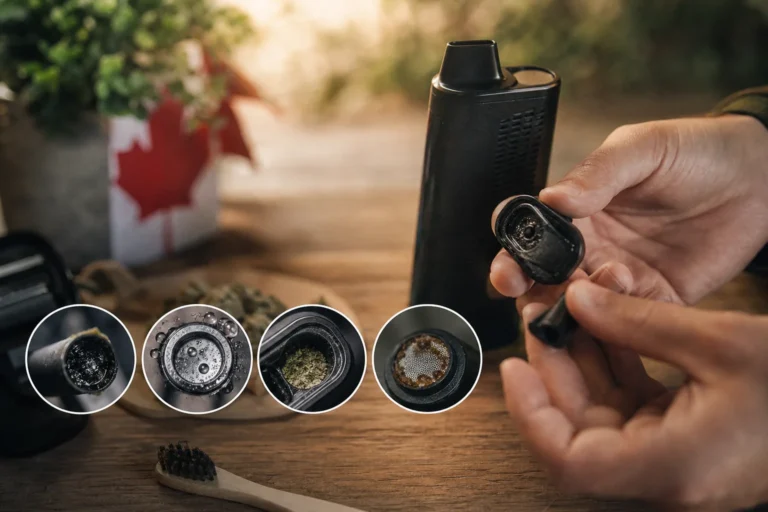
Complete the initial heat cycle and first draws according to your vaporizer’s manual, then pause. A cool, accessible chamber may allow a surface stir, while a restricted or damaged oven requires a full stop. If airflow already feels restricted, use this clogged vaporizer airflow checklist before opening the chamber.

Use the right tool for the chamber lining
- Non-metal tool: Have a small wooden pick, silicone scoop, or manufacturer-approved stirring accessory ready. Avoid knives, needles, tweezers, and other sharp metal objects that can scratch the oven or break its screen.
- Stable surface: Place your vaporizer on a level, nonflammable surface before handling the bowl. Keep the mouthpiece, cap, and tool away from the edge.
- Clean hands: Wash and dry your hands so you can hold a small oven, mouthpiece, or removable chamber without slipping.
- Clear airway: Check that the mouthpiece and airway are not visibly blocked.
Check whether the bowl is ready to open
Wait until the chamber is cool enough to handle safely. Use your model’s instructions and the exterior feel as cues, not a universal waiting time, because vaporizers retain heat differently. You should never need to force the lid, screen, or oven open.
Confirm that the bowl is not overfilled before choosing how to stir. A packed chamber leaves little room for gentle movement and can push herb into the airway. If the device shows damage, smells of burning electronics, or cannot open safely, stop, let it cool fully, and consult the manual or manufacturer support.
Decide between a surface stir and a full unload
Choose a surface stir when the herb sits below the rim and only the upper layer looks settled. Use the tool lightly across the top rather than digging toward the screen. Choose a full unload only when the manual permits chamber removal and the bowl clearly needs emptying, checking, and even reloading.
Stir the Bowl Without Overpacking or Scratching the Oven
Once your first draws become weaker or uneven, a careful stir can reopen access to herb below the heated surface. You should not stir merely because the top has changed colour. Wait until the vapour drops off or lower material appears untouched.
Your goal is loose redistribution, not grinding. Each movement should protect the chamber, preserve airflow, and keep herb out of the device body.
-

Gentle stirring reopens herb access without damaging oven 1. Finish the first extraction pass
Take the initial draws at your normal setting until they become noticeably weaker. You should see a clear change in vapour production, not simply a darker surface. If the bowl still produces strong vapour, leave it alone. Stirring too early interrupts an even extraction and can scatter fresh herb.
Done looks like: the vapour has tapered off, and the herb sits below the rim. Failure warning: stirring a loose or overfilled bowl can push material into the airway.
-
2. Open the chamber only when it is safe
Pause the device according to its instructions, let it cool enough to handle, and place it securely on a stable surface. Open the chamber without twisting against resistance. You should be able to inspect the bowl without holding the hot device over your lap or another surface.
Done looks like: the chamber opens cleanly and remains steady. Failure warning: forcing a hot lid or using a sharp tool risks a damaged chamber and burns.
-
3. Lift and turn the herb gently
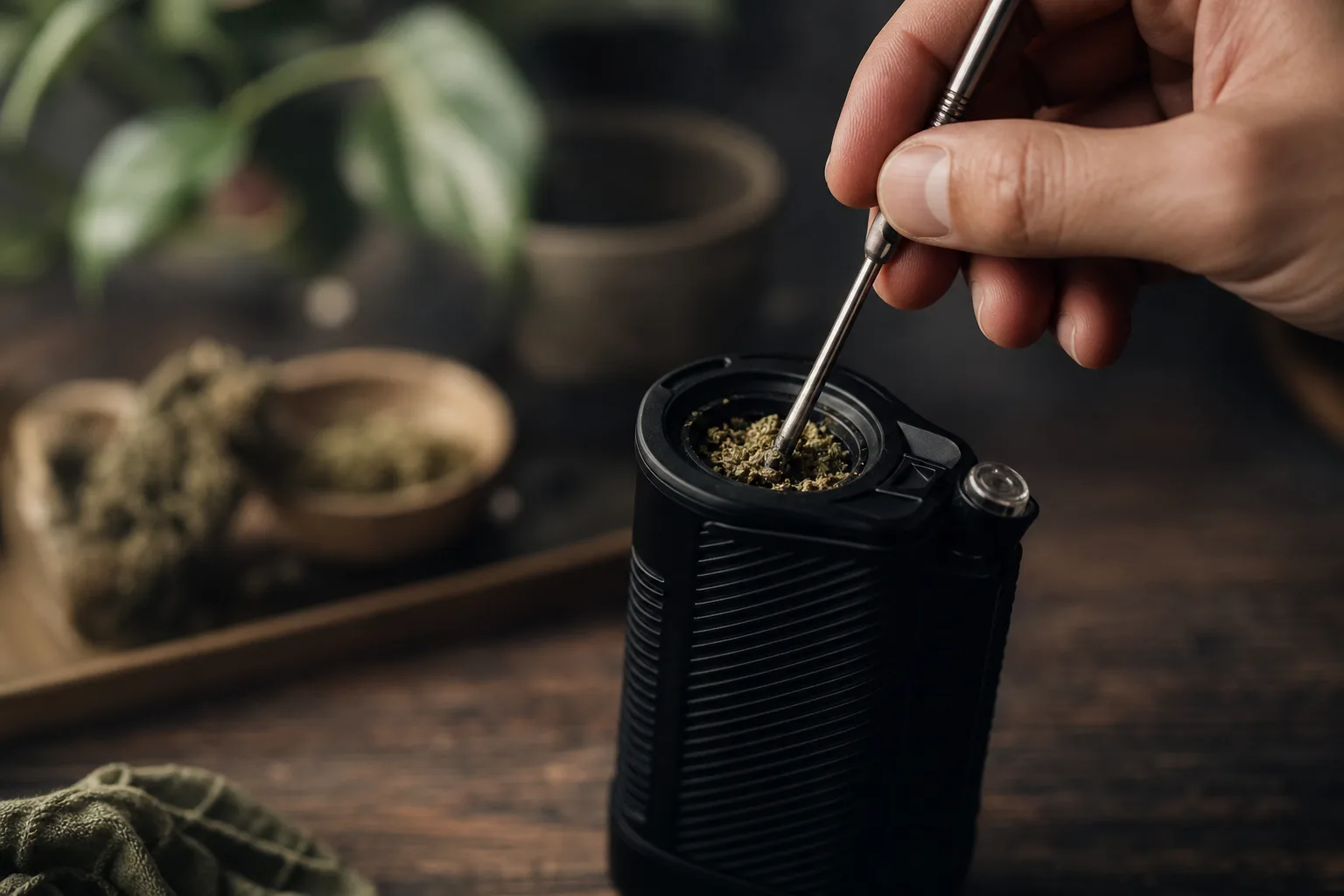
Insert a non-metal tool at the edge of the bowl. Lift and turn small portions toward the centre, then repeat from another edge. Do not scrape the oven wall, press down, or pulverize the herb. Your material should look loosened and mixed, not powdered.
Done looks like: darker and lighter pieces are gently redistributed. Failure warning: vigorous stirring can scatter herb into the airway, while sharp tools may scratch the oven.
-
4. Level the bowl without compressing it
Use the tool to settle the herb into a shallow, even layer. Leave space around the airway and keep the surface below the rim. You should see no mound blocking the screen and no material resting outside the chamber.
Done looks like: the herb contacts the heated area without being packed. Failure warning: overpacking restricts airflow and can force herb into internal passages.
-
5. Resume and check the next draw
Close the chamber and resume at the previous or manufacturer-recommended setting. Check the next draw before changing temperature or stirring again.
Weak: “Resume at a hotter setting and tamp the bowl firmly.” Resume gently: “Return to the previous 190°C setting, take one slow draw, and reassess the airflow.”
Done looks like: the draw feels open and vapour returns evenly. Failure warning: immediate temperature increases can overwork the exposed surface before the bowl settles.
- Cooling: The device is cool and secure before the chamber opens.
- Tool: A non-metal tool reaches the edge without scraping.
- Airway: No herb covers the screen or falls into the device.
- Pack: The bowl is level, loose, and below the rim.
- Check: One measured draw confirms the result before another adjustment.
Handle Sticky, Fine, or Nearly Spent Herb Differently
Some bowls punish the usual stir. Sticky herb can cling to your tool, fine material can block the screen, and a half-filled chamber can scatter its contents. You need to loosen the load without trading uneven heating for lost herb in the airway.
Colour gives you a clue, not a verdict. Weigh texture, airflow, aroma, and how much material remains before you stir again.
Sticky material that clumps together
If your herb forms tacky lumps, lift small clumps from the edge rather than smear them across the chamber. A thin non-metal tool can separate one piece at a time. Residue can collect on the tool or screen, so stop when the clumps break apart.
Fine material that migrates into the airway
Very fine herb needs an especially shallow touch. If you already feel restricted airflow, leave the load alone rather than loosening it. A deeper stir can send particles through the screen, where you may lose material and worsen the draw. Your first fix is gentle surface movement, not a full turnover.
Small loads and half-filled chambers
A half-filled bowl may shift when you probe it. Stabilize only the surface with a light touch, then leave loose pieces where they settle. Chasing fragments around the oven can push them toward the airway and create a less even pack. You want the load level, not perfectly rearranged.
When the colour and texture say do not stir again
A dark top layer over lighter herb deserves a cautious inspection. You can turn the top aside gently and check the lower layer, but stop if the entire load is uniformly dark, dry, and flavourless. A popcorn-like smell or weak, empty draw can indicate spent herb, not a request for more stirring. Judge colour alongside texture and vapour.
What works
- Lift, do not mash: You separate sticky clumps from the edge without spreading residue through the chamber.
- Touch the surface: You reduce airway loss when fine herb already restricts airflow.
- Stabilize small loads: You keep a half-filled bowl settled instead of scattering pieces.
What fails
- Smearing sticky herb: You coat the tool or screen and may worsen airflow.
- Deep stirring fine herb: You can send particles into the airway.
- Stirring spent material: You gain little when the load is dark, dry, and flavourless.
Match the Symptom to the First Fix Before Stirring Again
When a stir goes wrong, your next move matters more than another pass with the tool. A restricted draw, harsh vapour, or loose herb can point to packing, heat, screen, or grind problems rather than uneven extraction.
Use the symptom as your starting clue, not a final diagnosis. Check your vaporizer’s instructions before removing a screen or opening any part, then try one controlled response instead of adding more force.
Airflow suddenly feels restricted
If you press the herb down and the draw weakens, you may have compressed the load against the screen. Stop tamping. Gently loosen only the surface, then follow the approved airway-cleaning procedure for your model.
Vapour becomes harsh after the pause
Harsh vapour after disturbing a hot bowl can mean the chamber retained heat, or your setting is too high for the remaining load. The weak move is to continue immediately at 220°C. Better move: pause until the device is safe to handle, then resume gently at the previous or manufacturer-recommended setting.
Herb reaches the mouthpiece
Herb in your mouthpiece after using a sharp tool suggests over-agitation, an overly fine grind, or a disturbed screen. Power down, stop using sharp tools, and inspect or clean the mouthpiece and screen as your manual directs.
The stir changes nothing
If one careful stir produces no improvement, your load may already be spent. Take one measured test draw. If flavour and vapour remain absent, stop stirring rather than repeatedly grinding the herb into finer particles.
- Restricted draw: Treat compression or a blocked airway as the first suspect.
- Harsh vapour: Let retained heat fall before changing anything else.
- Loose herb: Check the mouthpiece and screen before using the device again.
- No improvement: Confirm whether the load is spent before stirring again.
| symptom | likely cause | first fix |
|---|---|---|
| Weak airflow after pressing the herb down | The load is over-compressed or the screen or airway is restricted | Stop tamping; gently loosen only the surface and check the approved airway-cleaning procedure. |
| Harsh vapour after disturbing a hot bowl | The chamber retained heat or the setting is too high for the current load | Pause until safe to handle, then resume more gently at the previous or manufacturer-recommended setting. |
| Herb appears in the mouthpiece | Aggressive stirring, an overly fine grind, or a disturbed screen | Power down, stop using sharp tools, and inspect or clean the mouthpiece and screen as directed. |
| No improvement after one careful stir | The load may be nearly spent rather than unevenly heated | Take one measured test draw; if flavour and vapour remain absent, stop stirring and replace the load when appropriate. |
Check the Next Draw Instead of Guessing From Colour Alone
After you stir, the next draw gives better evidence than the surface alone. Wait for the chamber to settle, take one controlled draw, and observe the following draw only if the result still feels uneven.
A dark surface is one clue, not a verdict. Your top layer can darken while lower herb remains less used, so judge airflow, vapour, taste, and the load together.
Stop opening the chamber repeatedly. You’ll learn more from a calm check than from disturbing the bowl after every draw.
Signs the bowl is heating more evenly
- Airflow: Your draw remains comfortable instead of becoming suddenly tight or restricted.
- Vapour: You see a more consistent result across the first and second draws, without one strong pull followed by an abrupt drop.
- Taste: Your vapour does not turn sharply burnt, acrid, or unusually harsh immediately after stirring.
- Visible load: You see a more even progression across the bowl, rather than a dark cap sitting over noticeably untouched material.
If vapour, flavour, and effect have clearly faded, and your material looks evenly spent, stop stirring. You are unlikely to recover much by breaking the load apart again. The precise colour will vary with the herb, device, draw style, and heat setting.
Signs the load is too tight or too wet
A comfortable first draw followed by tightening can point to disturbed material settling against the screen. You may also notice weak vapour despite a dark top layer when the pack is dense, damp, or blocking hot air from reaching the centre.
Don’t compensate with repeated stirring. If the bowl remains uneven after one careful check, let your device cool fully. Then inspect the pack and screen, confirm the chamber is not overfilled, and follow the model instructions before trying again.
What to adjust on the next session
Use the result to change one variable, not everything at once. A looser pack may improve airflow, while a slightly drier grind may help wet herb heat more consistently. Your device instructions take priority, especially when the chamber uses a delicate screen or a narrow air path.
Keep the next session simple: prepare the bowl consistently, take measured draws, and make one gentle mid-session stir only when the evidence points to uneven use.
Start With One Gentle Mid-Session Stir
You don’t need to reopen a chamber every time vapour thins. Repeated stirring can disturb the load, scatter fine herb, or damage a delicate screen when the real issue is packing or airflow.
Use one bowl as a controlled test. Change one thing, then judge the next draw before reaching for the tool again.
1. Set up the chamber and tool
Choose a small, rounded non-metal tool and place your vaporizer on a stable surface. Keep the tool clean, and follow the manual if your chamber should remain closed during operation.
- Tool: A rounded pick or stirring tool is ready without a sharp edge that could scratch the oven.
- Position: Your device is steady, upright, and cool enough to open under its instructions.
- Load: The herb is level and loose, with the airway clear rather than pressed down.
2. Take the first extraction pass
Take your normal initial draws at the device’s recommended dry-herb setting. Don’t stir before the first pass, because you need a clear baseline for vapour, flavour, airflow, and heat.
Weak: “Set the device hotter immediately because the first draw feels light.”
Strong: “Use the manufacturer’s recommended setting, then assess the next draw before changing temperature or packing.”
3. Perform one gentle stir
Pause when the chamber can be opened safely. Insert the tool shallowly, lift a small portion, and turn it once or twice. Never grind the herb, scrape the oven, or chase particles around the chamber.
Keep the movement deliberate. One gentle mid-session stir is usually enough to redistribute the load without creating a new airflow problem.
4. Resume and inspect the result
Level the herb lightly without compressing it or blocking the airway. Resume at the same setting, then judge the next draw rather than relying on colour alone. A better result has usable airflow and more even vapour without added harshness.
Core stirring sequence
- Prepare: Set out the rounded tool and stable surface before heating.
- Extract: Take the device’s normal initial draws at its recommended setting.
- Pause: Wait until opening the chamber is safe under the manual.
- Turn: Lift and turn the herb gently, never grinding or scraping.
- Level: Settle the load without packing it down.
- Judge: Take the next draw and assess airflow, vapour, flavour, and evenness before repeating anything.
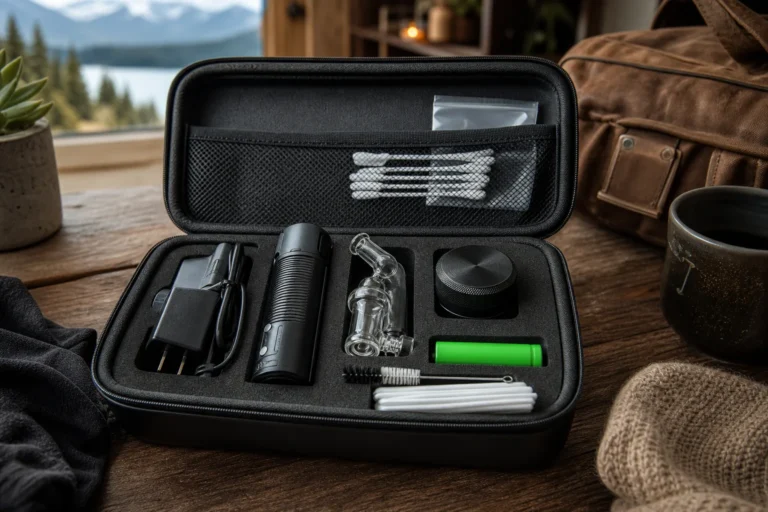
PlanetHaze supports the wider setup with suitable vaporizers, grinders, replacement screens, and accessories, but careful handling matters more than unnecessary stirring or new equipment.
If you want a faster way to choose and maintain suitable gear, PlanetHaze offers vaporizers, grinders, replacement parts, and accessories for adult cannabis consumers, with vaporizer use and maintenance guides for practical setup decisions.